
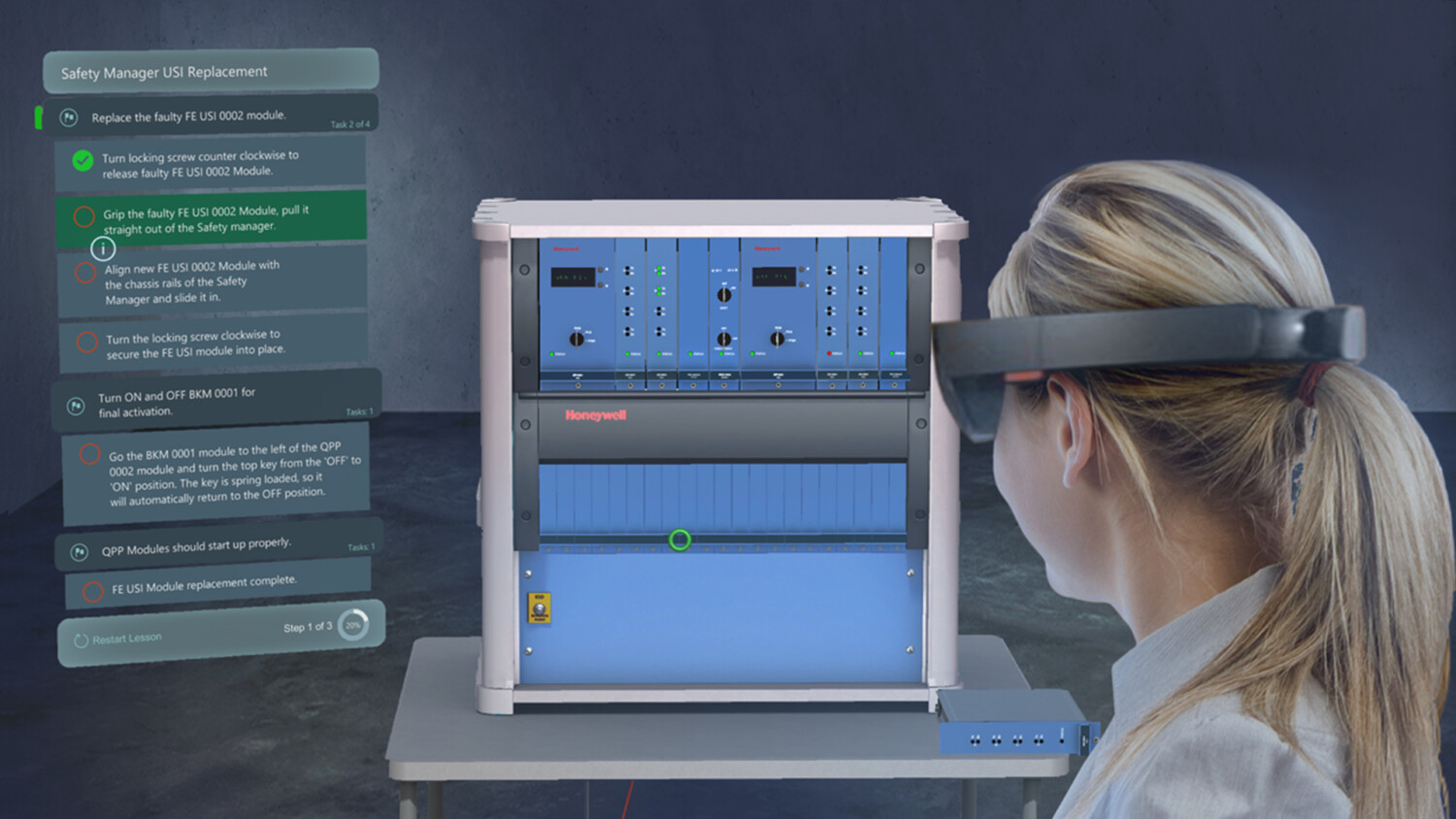
Using Mixed Reality to Create Virtual Training Systems
Designing and delivering working mixed-reality training prototypes for enterprise customers.
This work represents early mixed-reality training prototypes developed for enterprise customers during the emergence of HoloLens as a new spatial computing platform. These experiences were designed, built, and deployed as real software to validate what mixed reality could actually support in operational environments.
The Problem
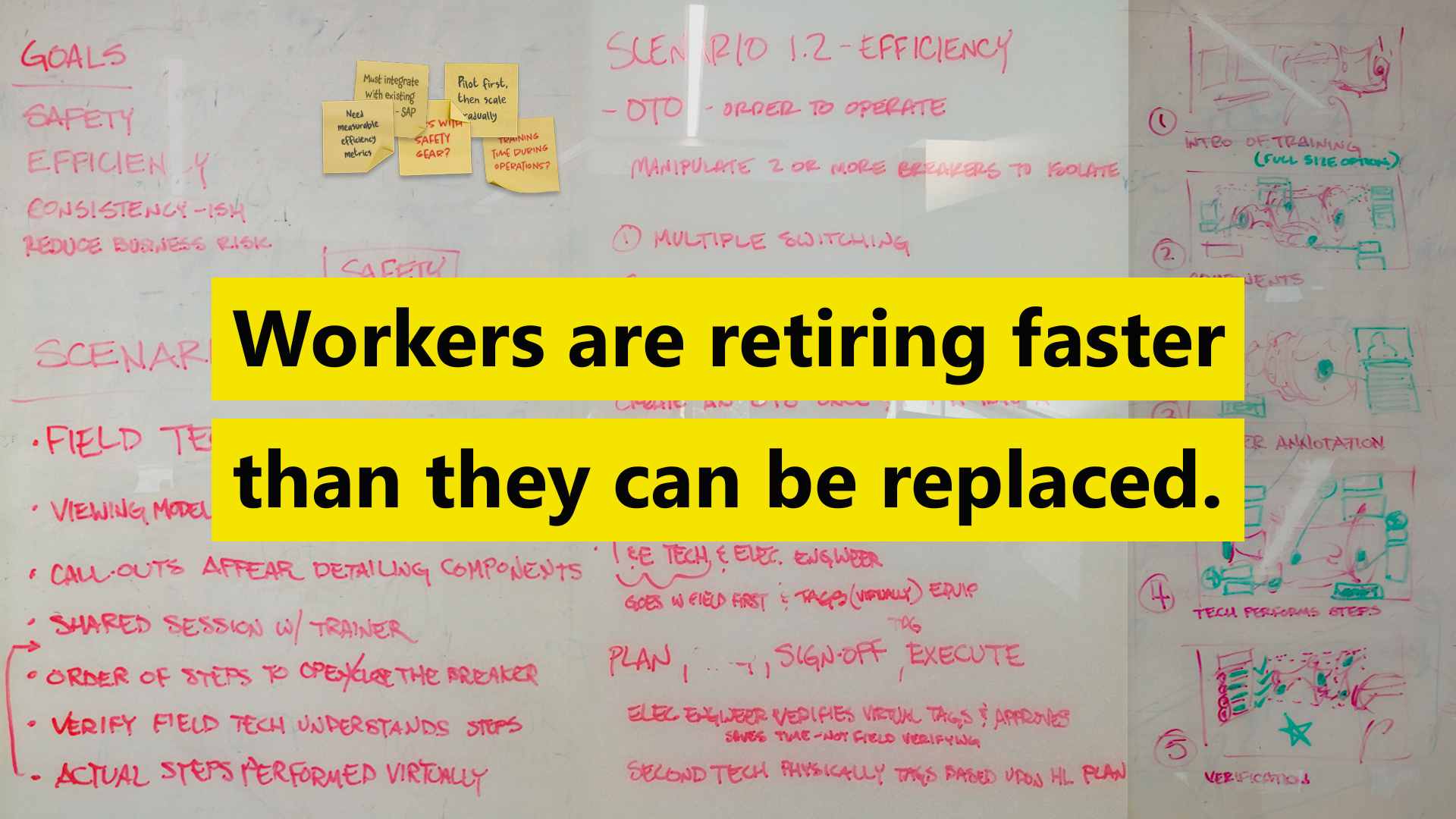
Working with enterprise customers across industrial environments, I discovered a common concern: experienced workers were leaving faster than new employees could be trained to replace them. Decades of institutional knowledge were walking out the door, often with no scalable way to transfer that experience to the next generation.
Traditional training methods struggled to keep up. Shadowing required expert availability. Documentation lacked context. Classroom instruction failed to reflect real-world conditions. The result was longer ramp-up times, inconsistent execution, and increased operational risk. The culmination of which was tremendous expense and liability.
These challenges surfaced repeatedly through workshops, site visits, and early enterprise engagements, shaping how I began to think about training as a systems problem rather than a content problem.
Framing The Opportunity
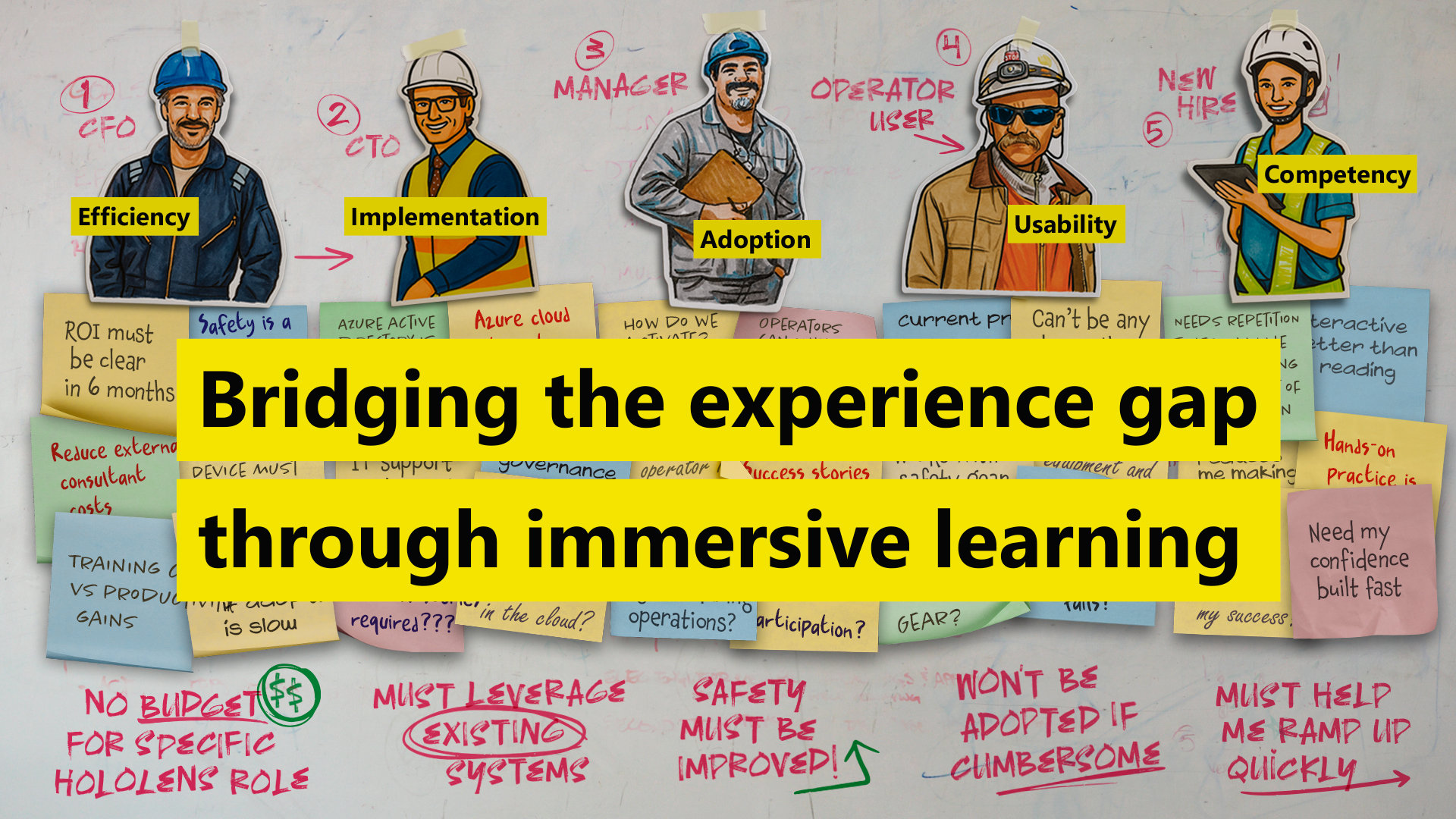
Early discovery revealed that training failures were rarely about access to information. They were about context, repetition, and the inability to safely practice real tasks before performing them on live equipment.
Any viable solution needed to support multiple roles within a single system, balancing oversight, onboarding, and hands-on execution without fragmenting the experience. This reframing positioned training as an interactive, spatial system rather than a sequence of instructions.
Role & Leadership
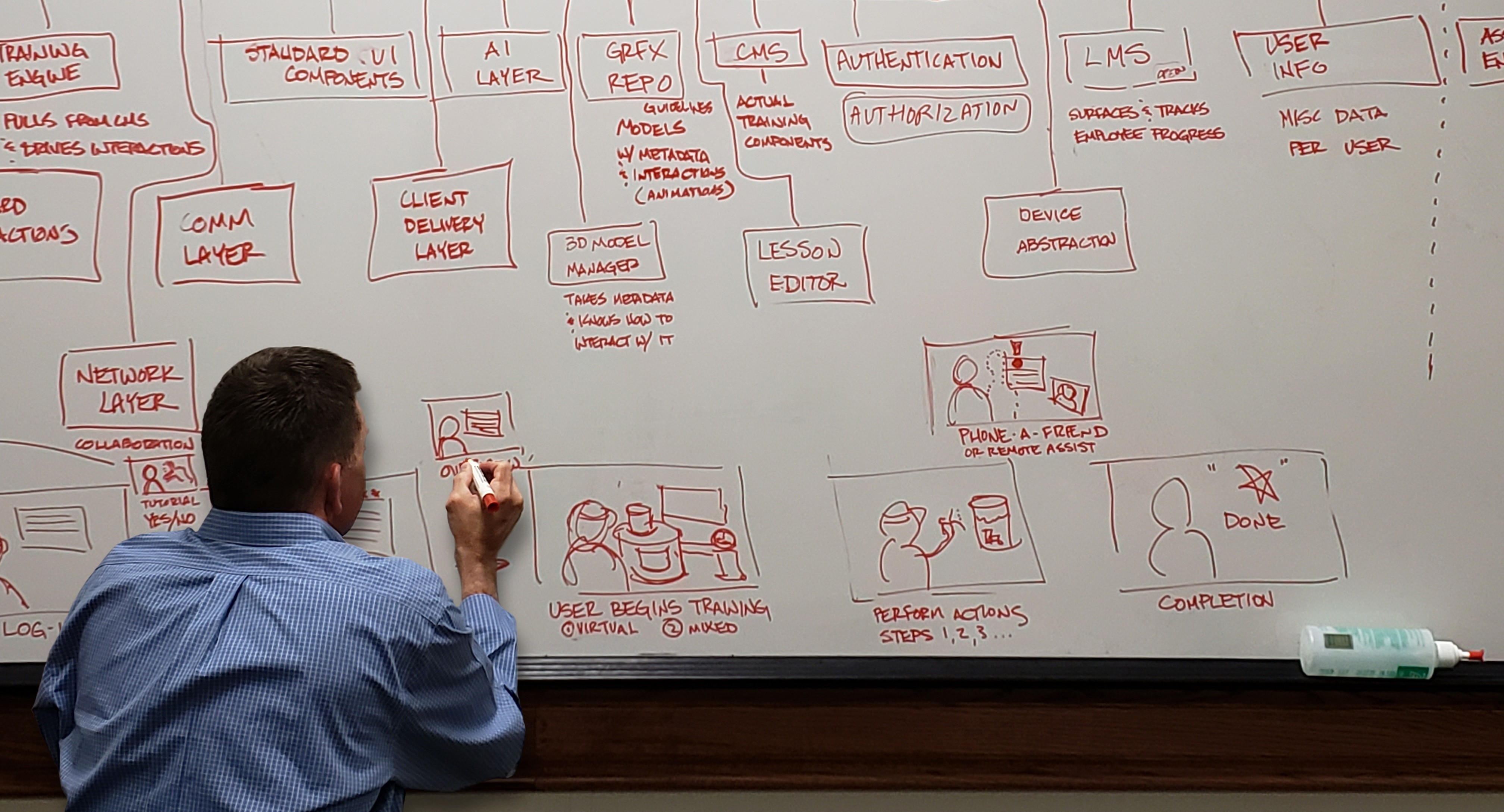
My role across this work spanned creative direction, program management, and hands-on design. I led early customer workshops and discovery sessions, translating operational challenges into experience concepts teams could execute against.
For some projects, my involvement focused on defining the system vision and interaction model before transitioning execution to delivery teams. For others, I remained engaged through prototyping and deployment, leading cross-disciplinary teams through design, development, and validation.
This work lived within a services organization supporting a new platform. Our responsibility was to make mixed reality real, building working software that demonstrated actual capability under real constraints.
Interaction Patterns & Learning Mechanics
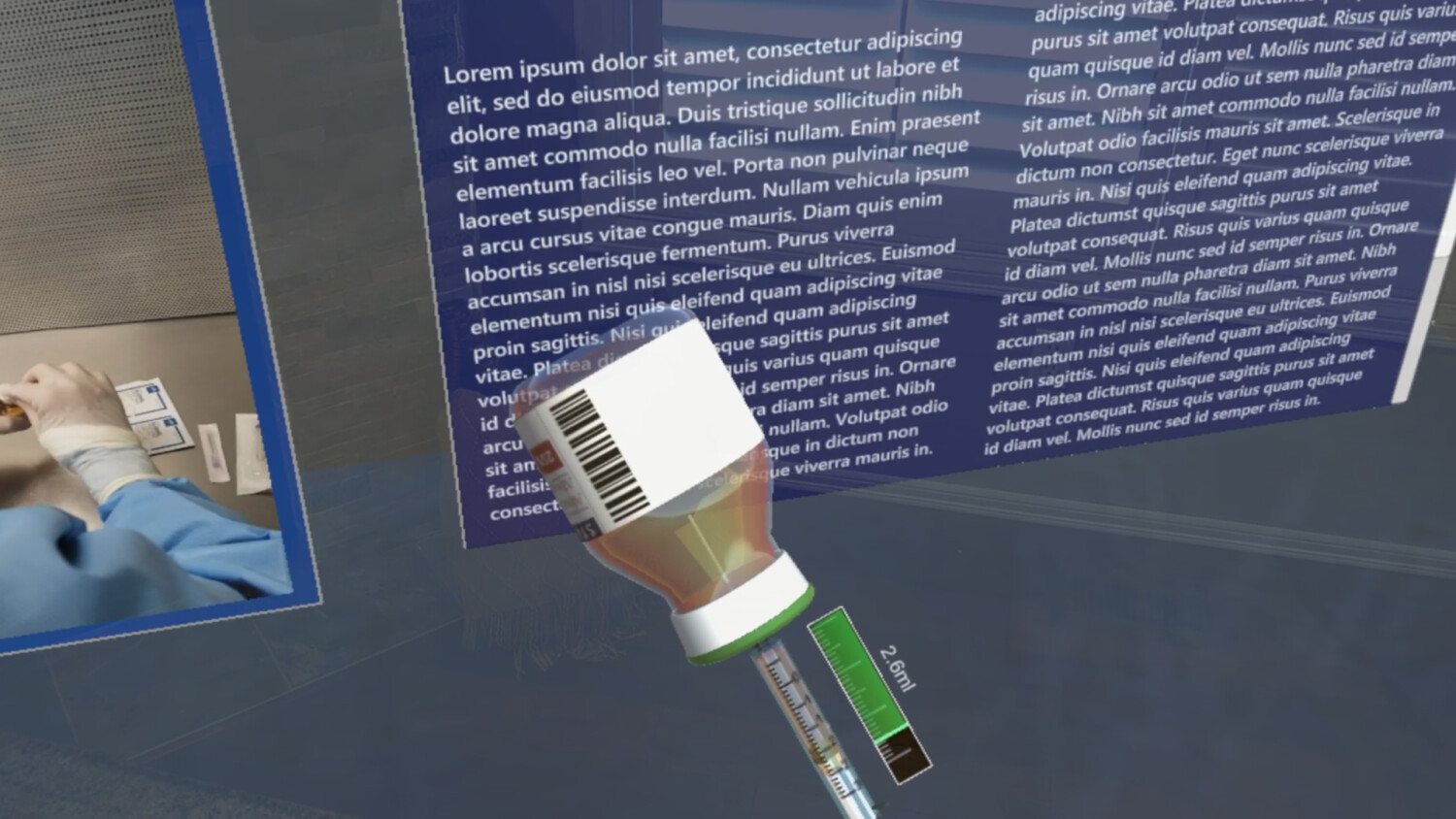
Rather than inventing entirely new interaction models for each scenario, the work focused on leveraging and extending foundational mixed-reality interaction patterns provided by the platform. These core systems were adapted and composed into a small, repeatable set of learning mechanics that could support training across different equipment, procedures, and skill levels.
In cases requiring precision or complex motor sequencing, existing interaction primitives were deliberately combined to simulate real-world constraints rather than abstracting them away.
Design decisions emphasized physical grounding and clarity. Direct manipulation, spatial alignment, and clear affordances were favored over abstraction, allowing users to focus on completing tasks rather than learning new interaction conventions for each experience.
Across scenarios, these shared mechanics supported the full learning loop: exploring systems in context, receiving guided instruction, performing actions, and validating understanding through feedback. By reusing and refining these patterns, teams reduced cognitive load, reinforced muscle memory, and enabled consistent progression while still tailoring each experience to customer-specific workflows.
In several cases, the patterns and tooling developed through this work were packaged and shared back with the broader mixed-reality ecosystem through open-source contributions, helping advance platform-level best practices beyond individual customer engagements.

Prototyping & Validation
These experiences were not conceptual explorations. They were built, tested, and deployed as working prototypes in real customer environments to validate feasibility, usability, and value.

Environmental constraints such as limited field of view, gesture reliability, noise, safety requirements, and spatial complexity directly shaped interaction design. Prototyping exposed limitations early and ensured experiences could withstand real-world use.
This phase of the work was essential. It separated what sounded compelling from what actually worked, grounding mixed-reality training in practical reality rather than speculation.
Outcomes & Impact
While these projects were never released as commercial products, they were deployed as customer-facing prototypes and, in some cases, adopted in live training environments to evaluate feasibility, usability, and operational impact.
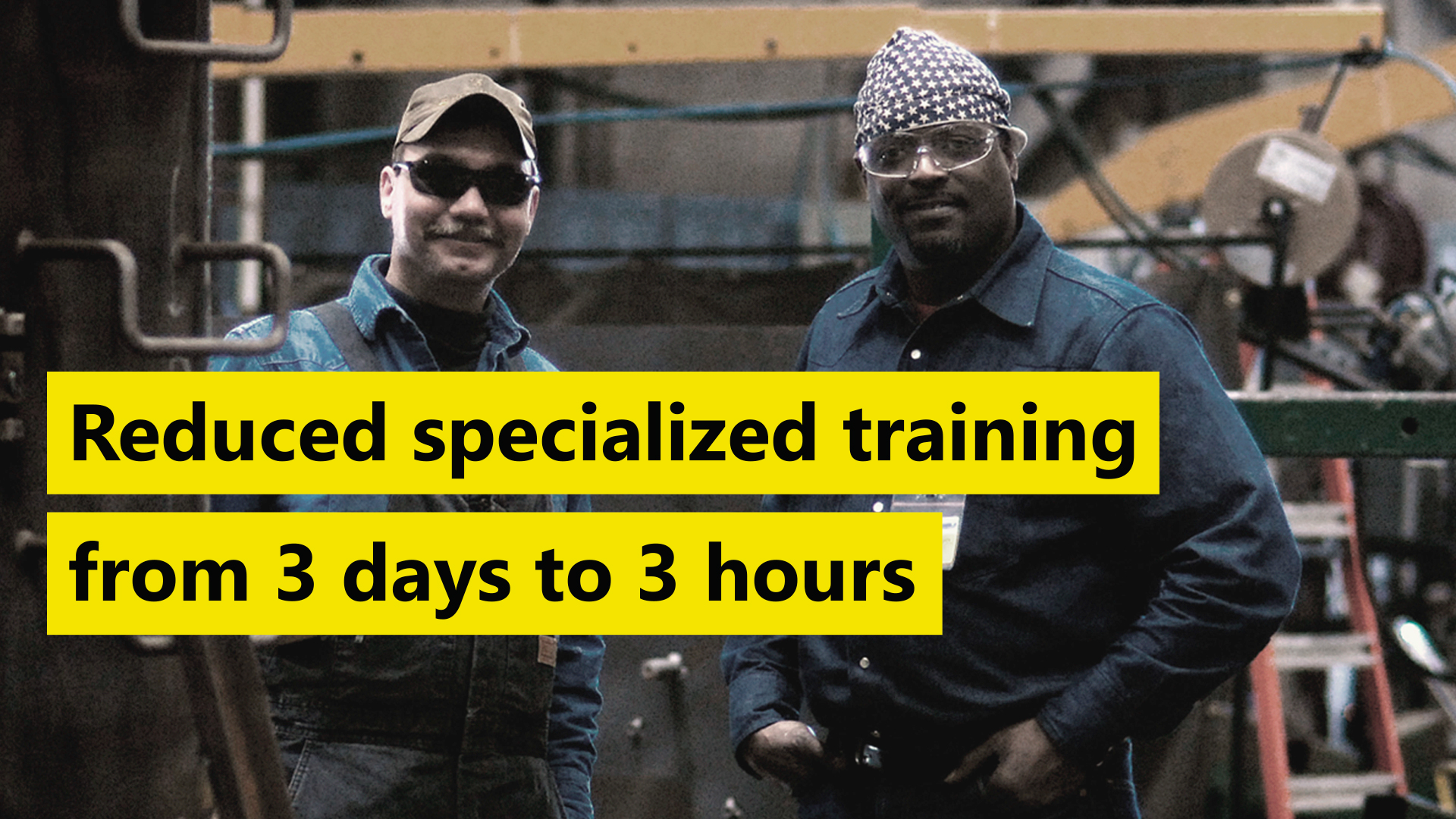
Across engagements, mixed-reality training demonstrated meaningful reductions in onboarding time and variability, while enabling safer practice, repeatable instruction, and greater consistency across skill levels. Customers were able to visualize complex systems, rehearse procedures before touching live equipment, and progress with greater confidence and fewer errors.
More importantly, these prototypes helped organizations rethink how training could scale. Rather than relying solely on expert availability or static documentation, teams began to see training as a reusable system, capable of adapting to different environments, equipment, and learners without starting from scratch each time.
Legacy & Platform Influence
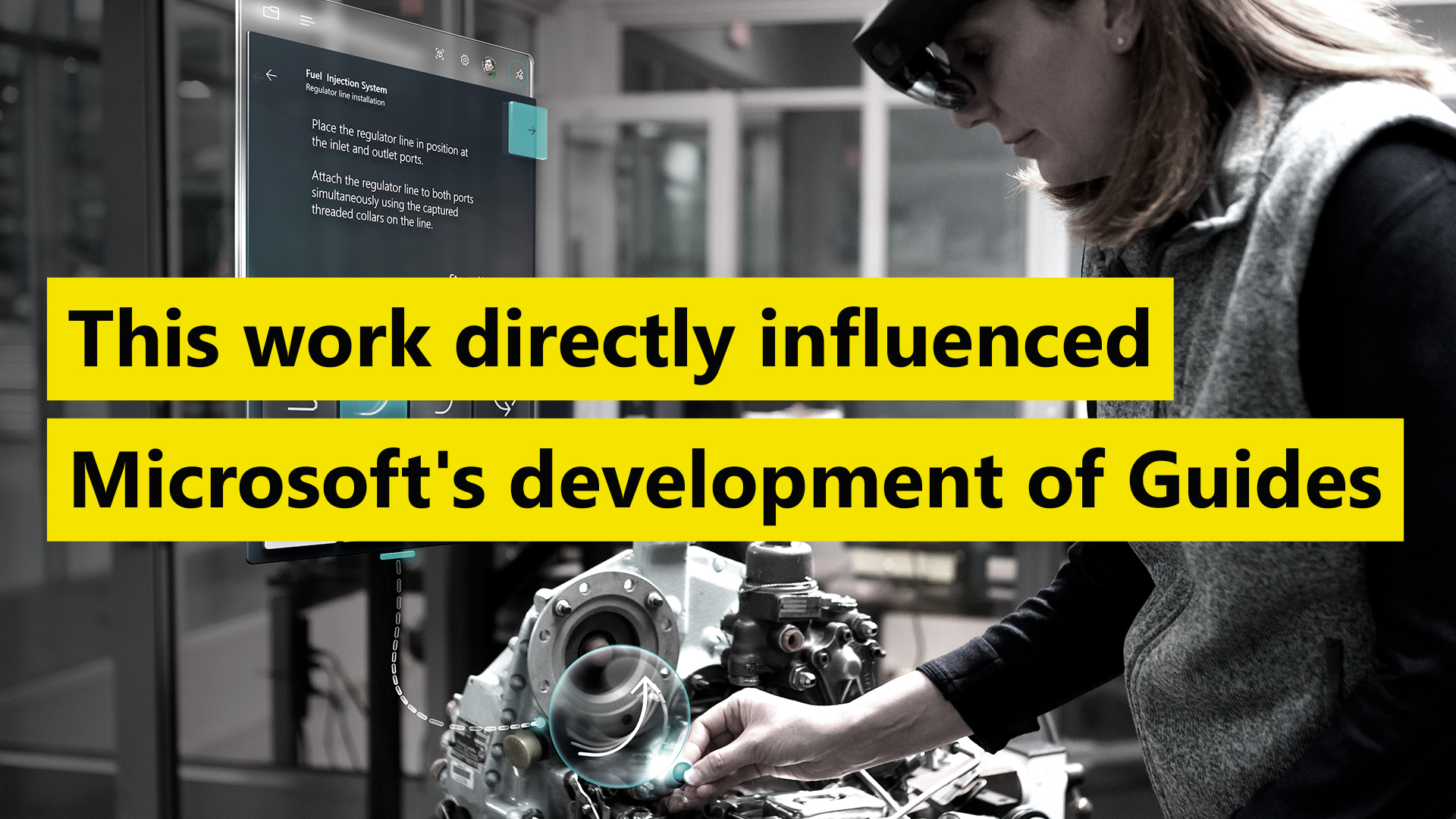
Patterns explored through these services engagements later informed and reinforced platform-level tools and workflows. What began as customer-specific training prototypes helped validate reusable models for guided instruction, spatial task execution, and repeatable learning loops.
In several cases, the interaction patterns and supporting tooling were packaged and shared back with the broader mixed-reality ecosystem through open-source contributions, helping advance best practices beyond individual customer engagements. The long-term takeaway was simple: innovation scales when it’s grounded in real constraints, real environments, and real use.
My Role and Areas of Contribution:
Product & Strategy
Vision
Align business goals, user needs, and technical realities into clear direction.
Experience & Interface Design (UX/UI)
Design intuitive, scalable experiences balancing usability and aesthetics.
Application & System Design
Design within real engineering constraints and sustainability.
Creative & Design Leadership
Set direction, mentor teams, and maintain quality through delivery.
Spatial & Environmental Design
Design environments where space and motion guide behavior.
3D Visualization & Prototyping
Utilize 3D to test concepts, align stakeholders, and reduce overall risk.