
Case Study | NCAA Football 09
Redefining the college experience
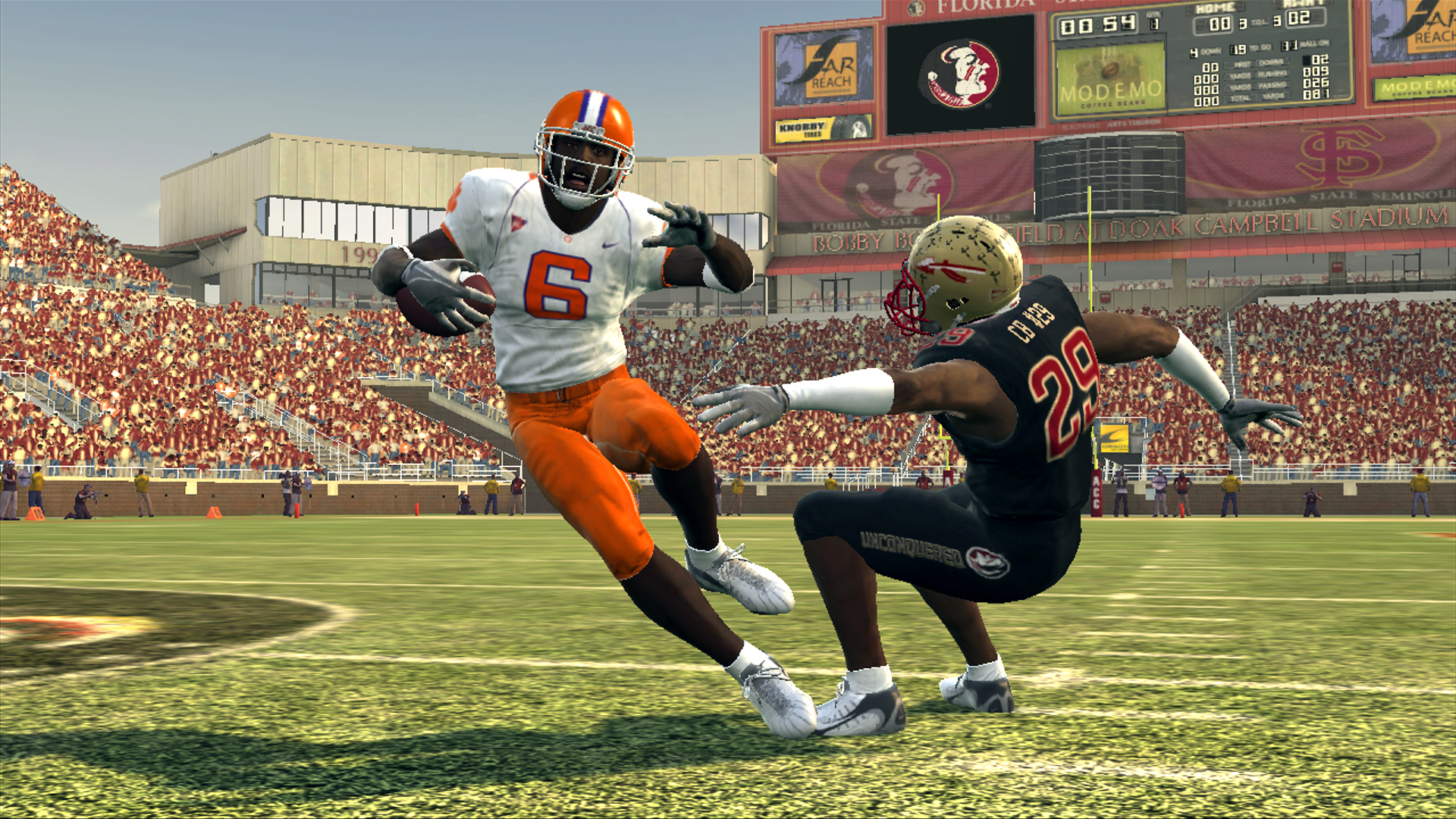
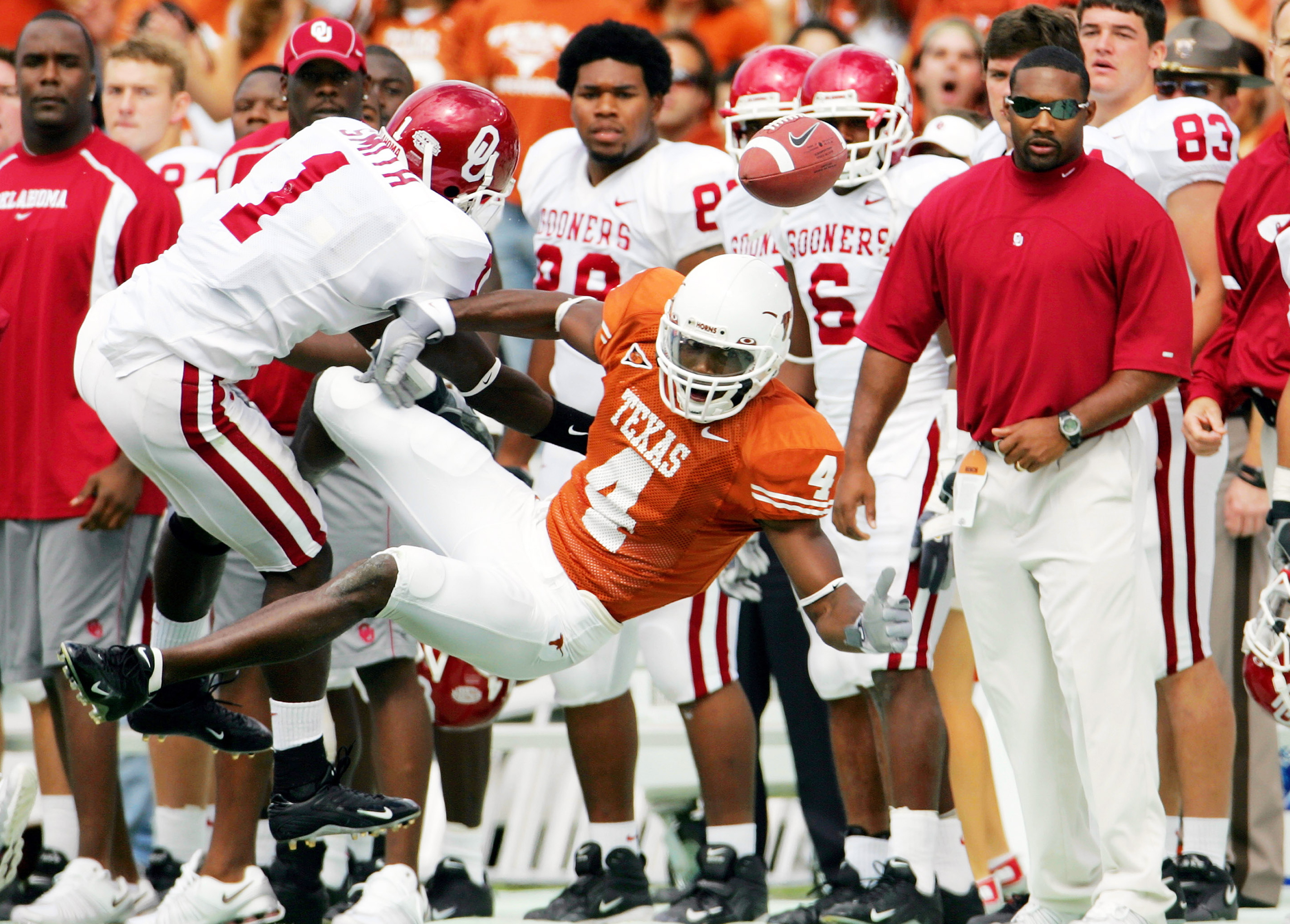
NCAA Football 09 marked a turning point for the franchise, not because of a single feature, but because we fundamentally rethought how college football should feel the moment you stepped onto the field. As Art Director at Electronic Arts, I led the effort to transform the series from a functional sports title into a cinematic, broadcast-driven game-day experience rooted in authenticity, tradition, and atmosphere.
College football is not just a faster or louder version of the professional game, it’s emotional, chaotic, and deeply visual. Stadiums pulse with color. Traditions define identity. Broadcast language shapes how fans experience every snap. Our goal was to capture that energy and translate it into a cohesive visual system that worked across characters, environments, lighting, presentation, and UI, without sacrificing performance or clarity.
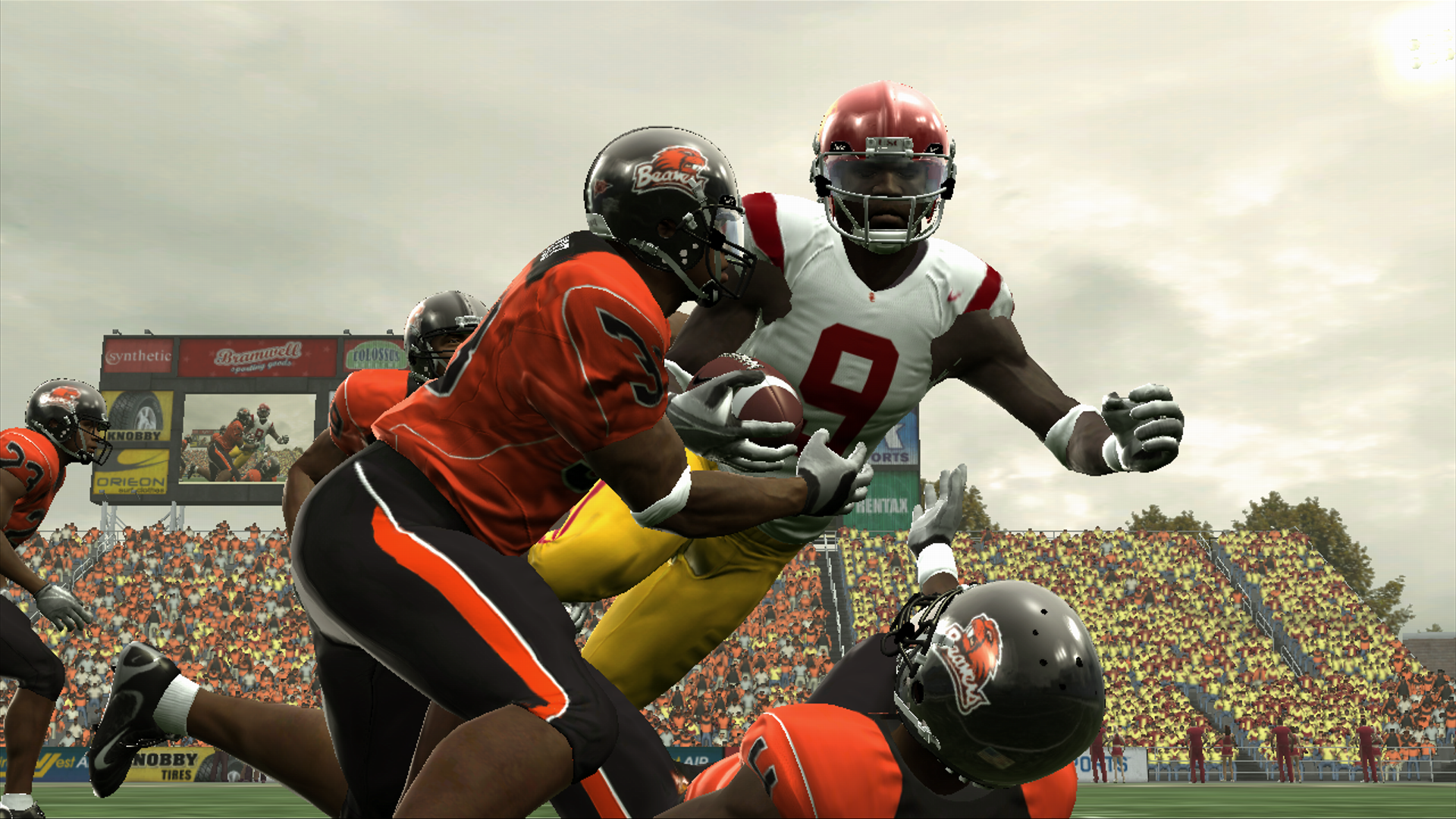
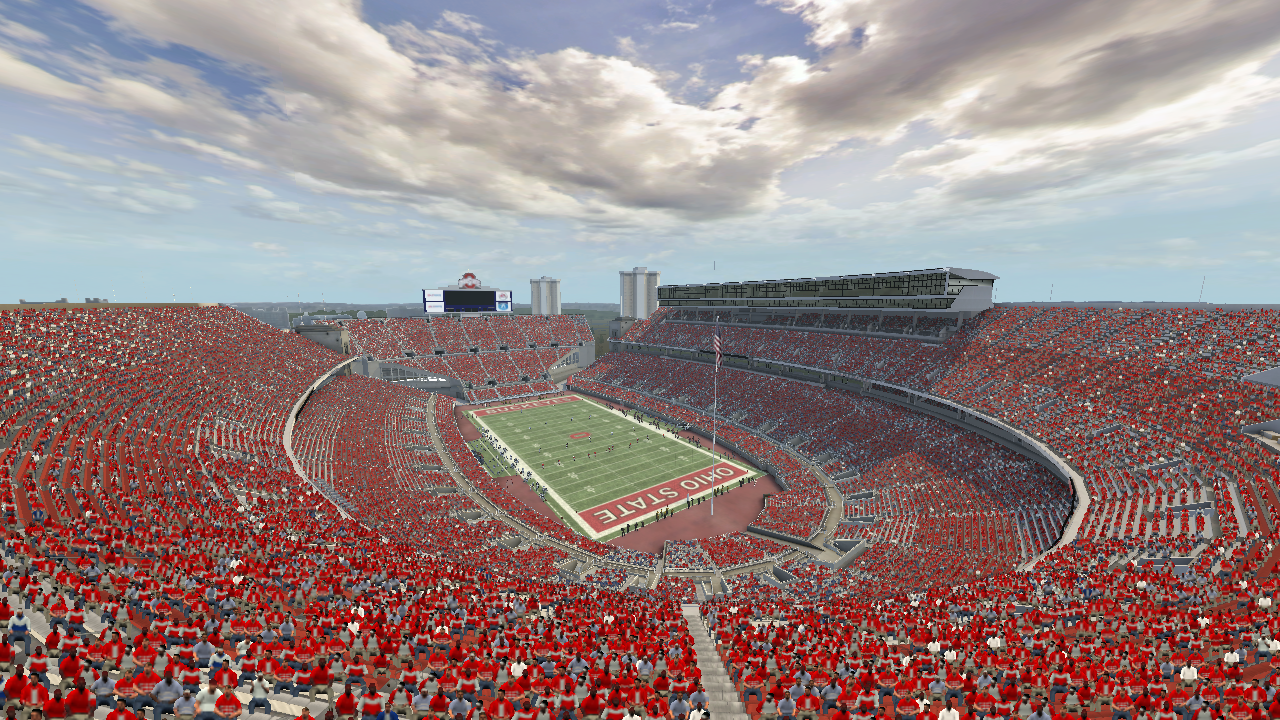
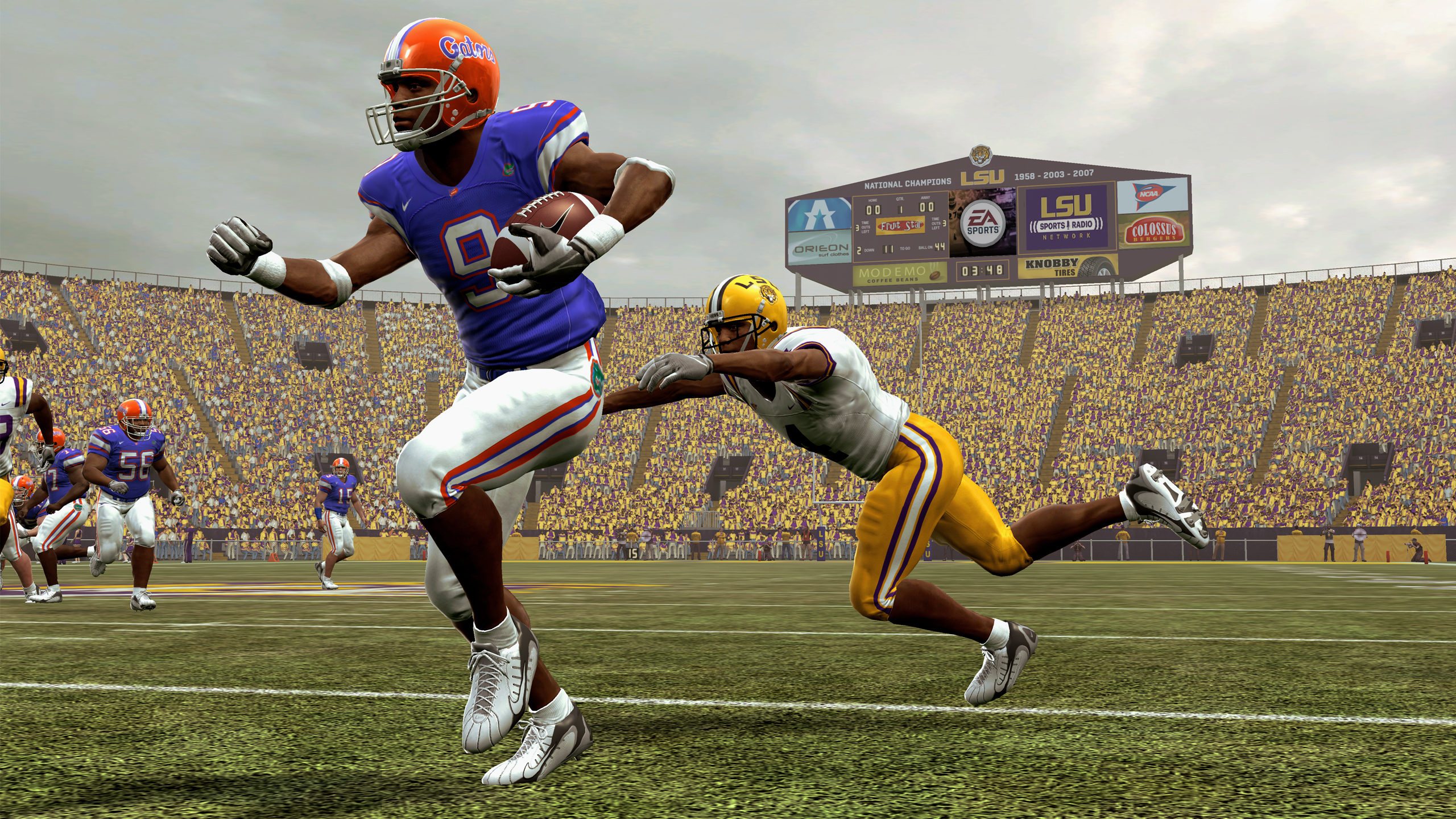


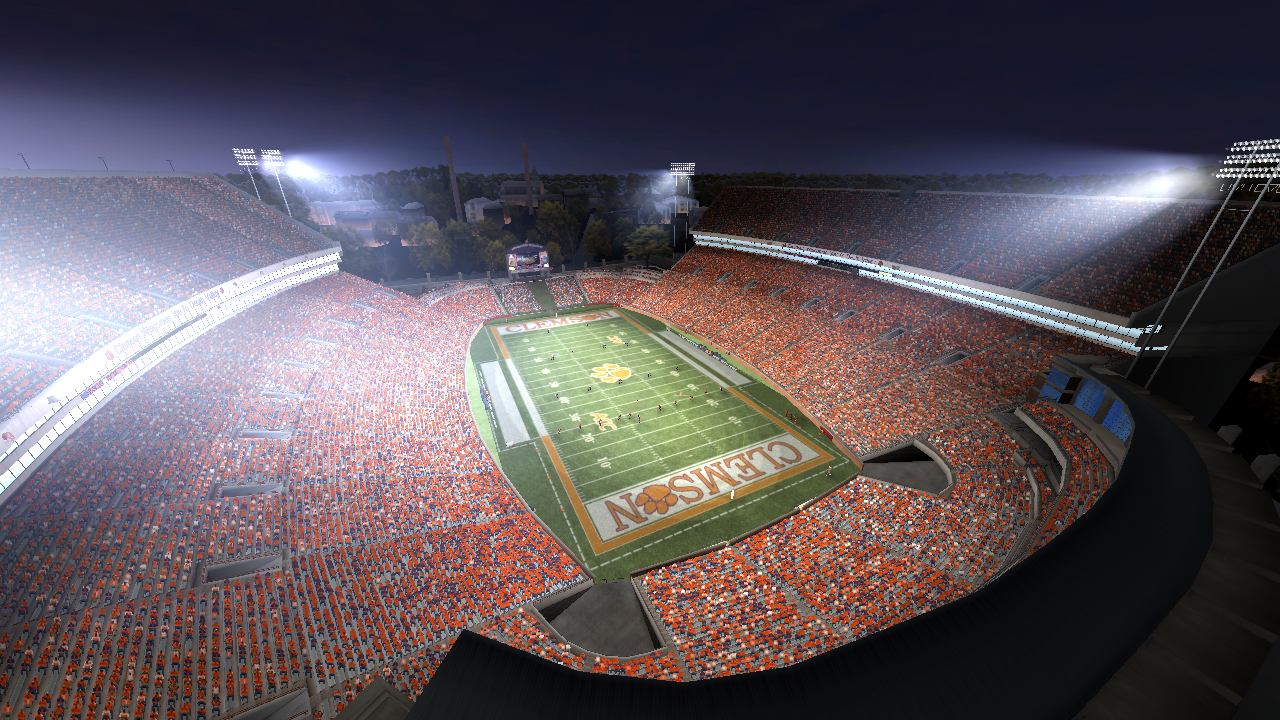
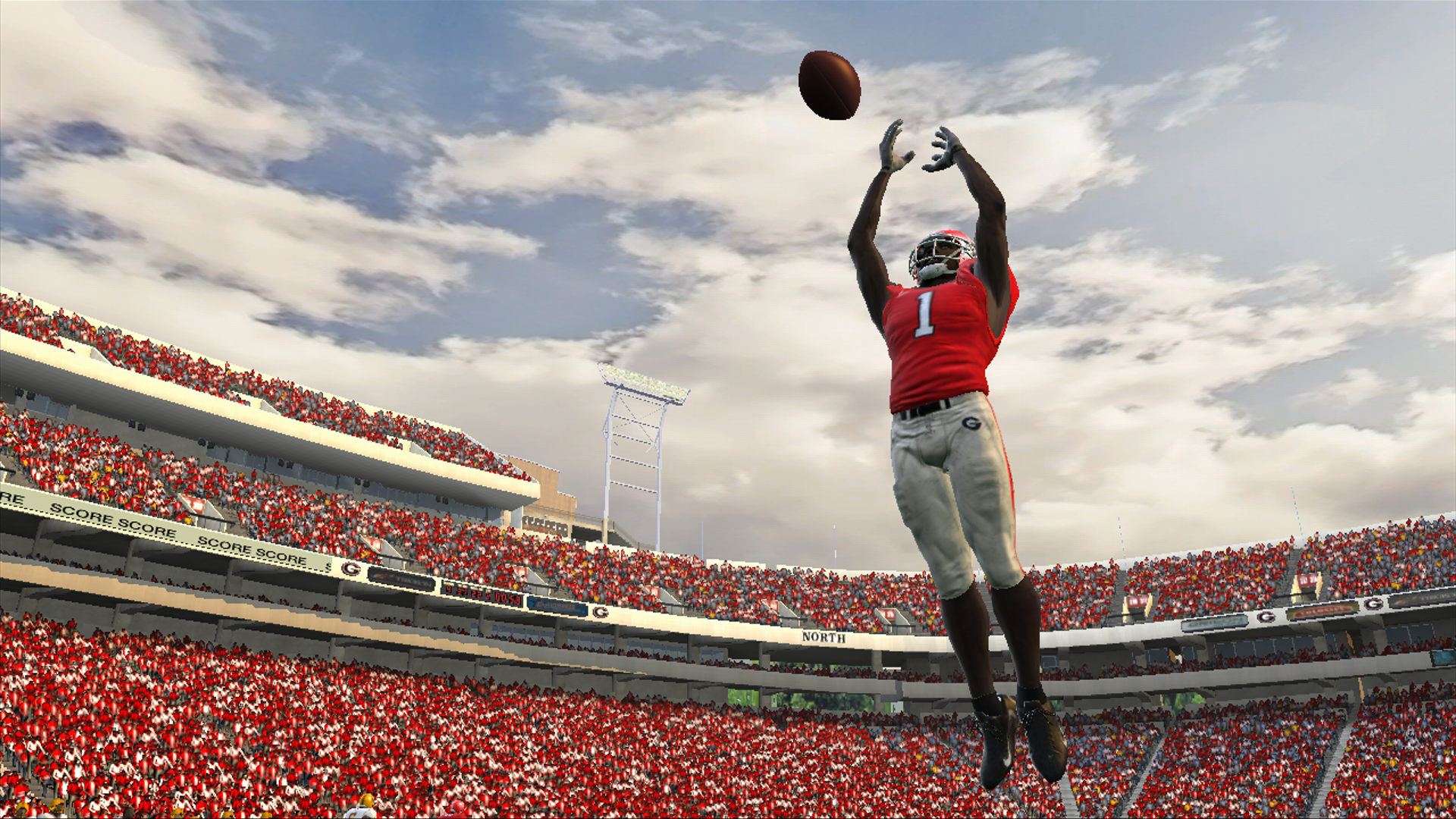
Rather than focusing on isolated upgrades, we approached NCAA Football 09 as a complete visual reset. Lighting was redesigned to enhance form, depth, and readability under every condition—from bright afternoon kickoffs to night games under stadium lights and enclosed domes. Characters were rebuilt with new scan data, corrected proportions, and material treatments that responded believably to light, motion, and wear. Environments were reimagined as living spaces, filled with crowd density, school-specific color, and traditions that made each stadium feel unmistakably collegiate.
At the same time, we leaned heavily into broadcast language. Camera choices, presentation moments, and pacing were informed by real-world game coverage, blimp shots, sideline perspectives, and cinematic transitions that framed the action the way fans were already conditioned to see it. The result was a game that didn’t just play like college football, it looked like it belonged on Saturday afternoon television.
NCAA Football 09 became the visual foundation for the franchise going forward, establishing a new baseline for authenticity, atmosphere, and presentation, one built on systems, not shortcuts.
This project wasn’t about pushing fidelity for its own sake, it was about building a visual language that could scale across teams, stadiums, and moments while preserving the emotion of the sport.
From Target to Transformation
The visual leap in NCAA Football 09 didn’t happen by accident. It began by defining a clear visual target, rooted in real-world reference, broadcast language, and the emotional rhythms of college football. Before characters were rebuilt or stadiums re-lit, we aligned on what the game needed to feel like when viewed through a camera, not just controlled by a player. That target became the filter through which every decision was made.
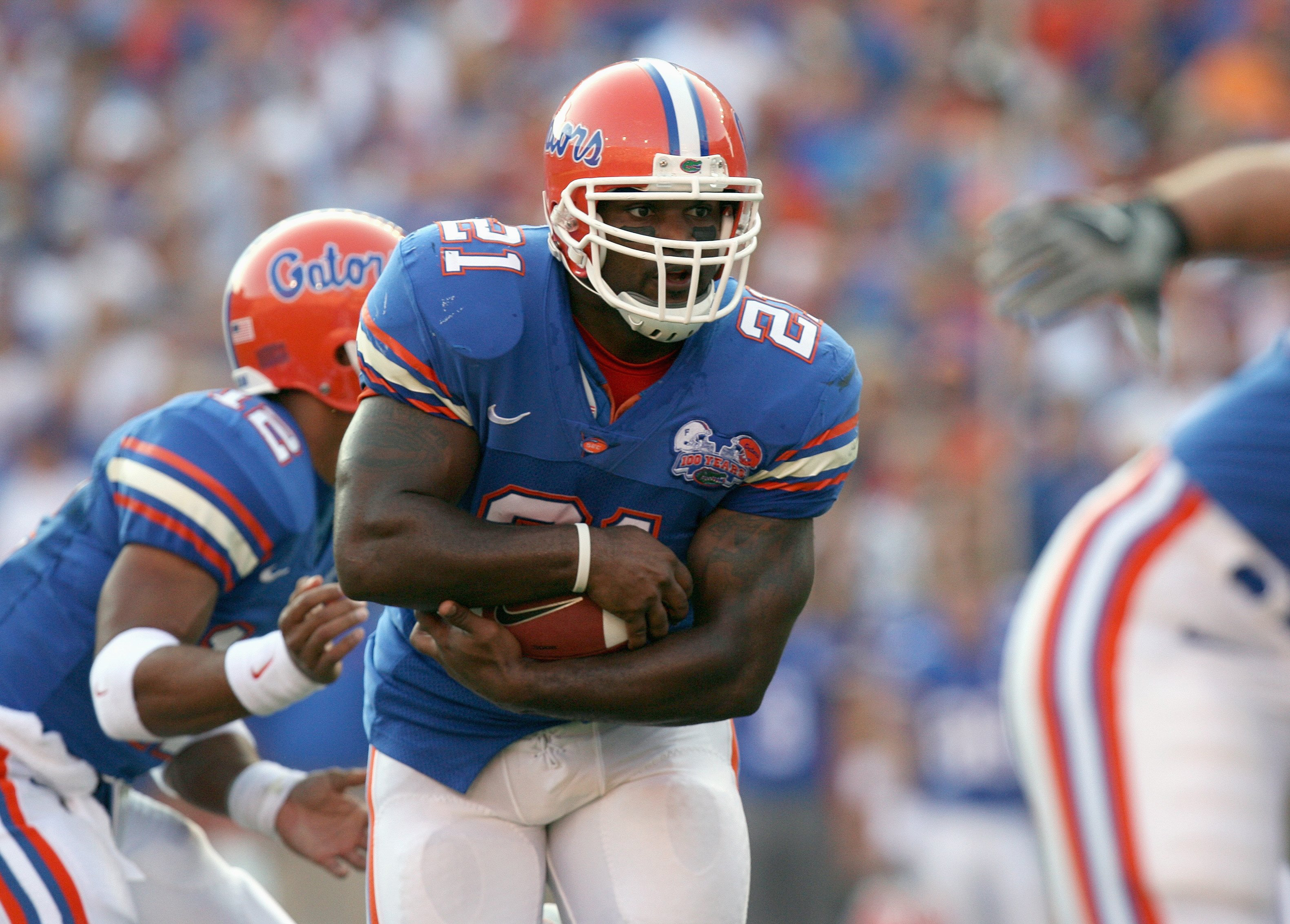

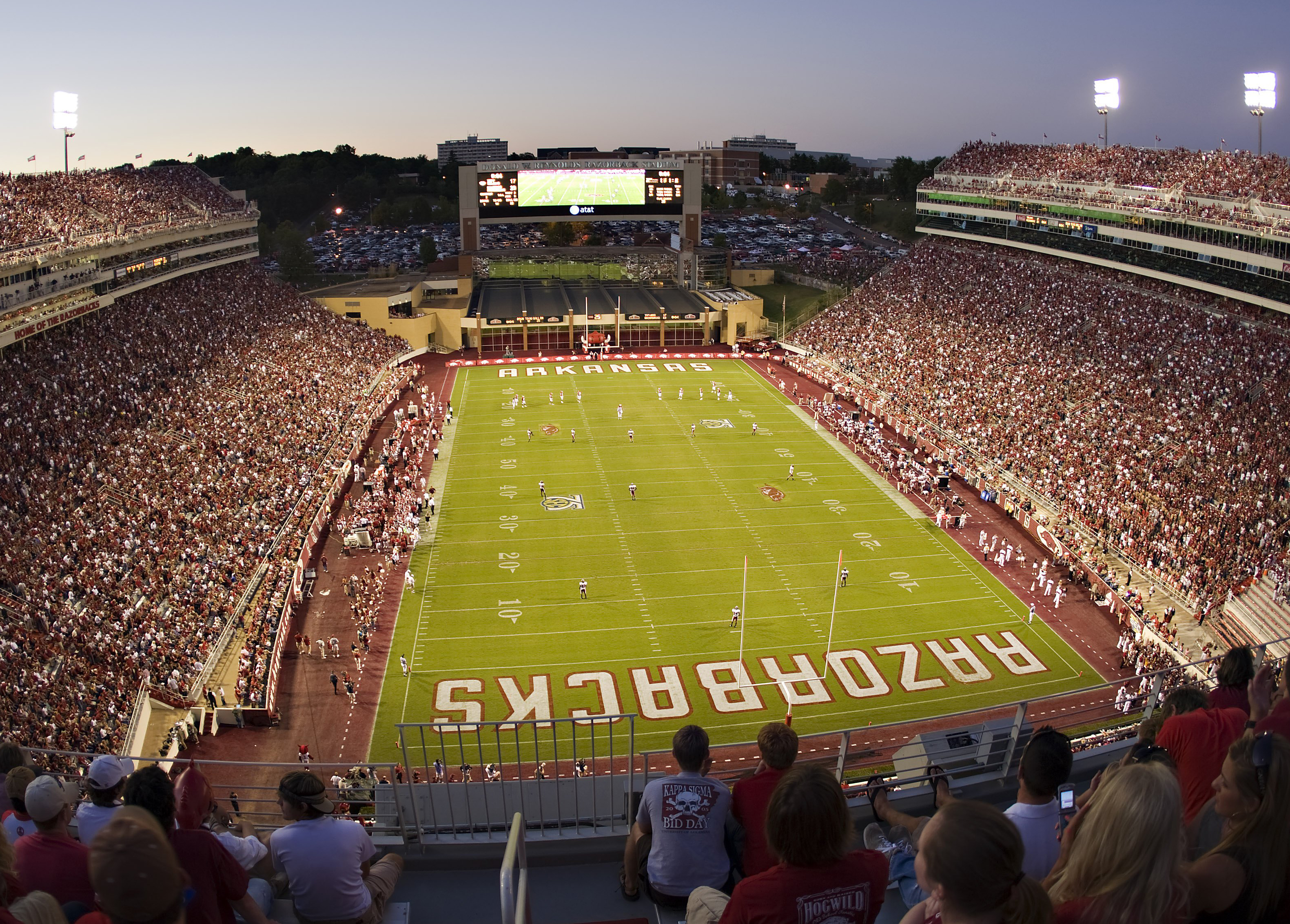

Pre-production was where those targets were pressure-tested. We used this phase to prove that our visual goals could survive scale, variation, and real-time constraints. Creating atmosphere comes at a cost—every added character, prop, and sideline element consumes memory and performance budget. In pre-production, we deliberately built scenes to stress those limits, testing how many players, cheerleaders, band members, photographers, and props we could support while maintaining clarity and frame rate. Players were sculpted across multiple body types to ensure proportion, mass, and silhouette held up under animation and broadcast cameras. Weather and lighting scenarios were explored through paint studies and lighting passes, idealizing what each condition needed to communicate emotionally before translating it into in-engine systems. This work allowed us to identify risk early, what could scale, what needed abstraction, and where visual fidelity could be traded for clarity, before those decisions became expensive to change.
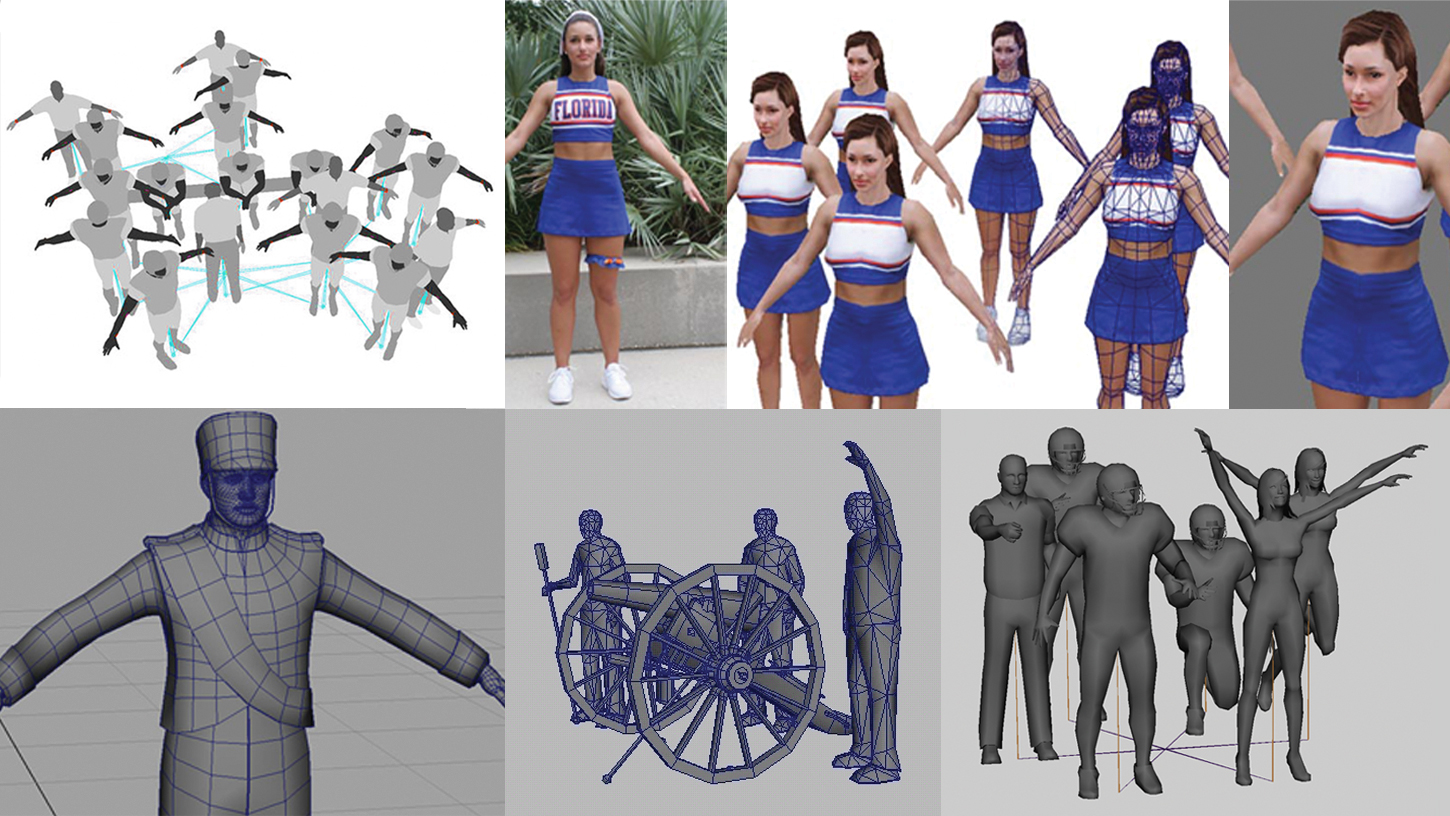
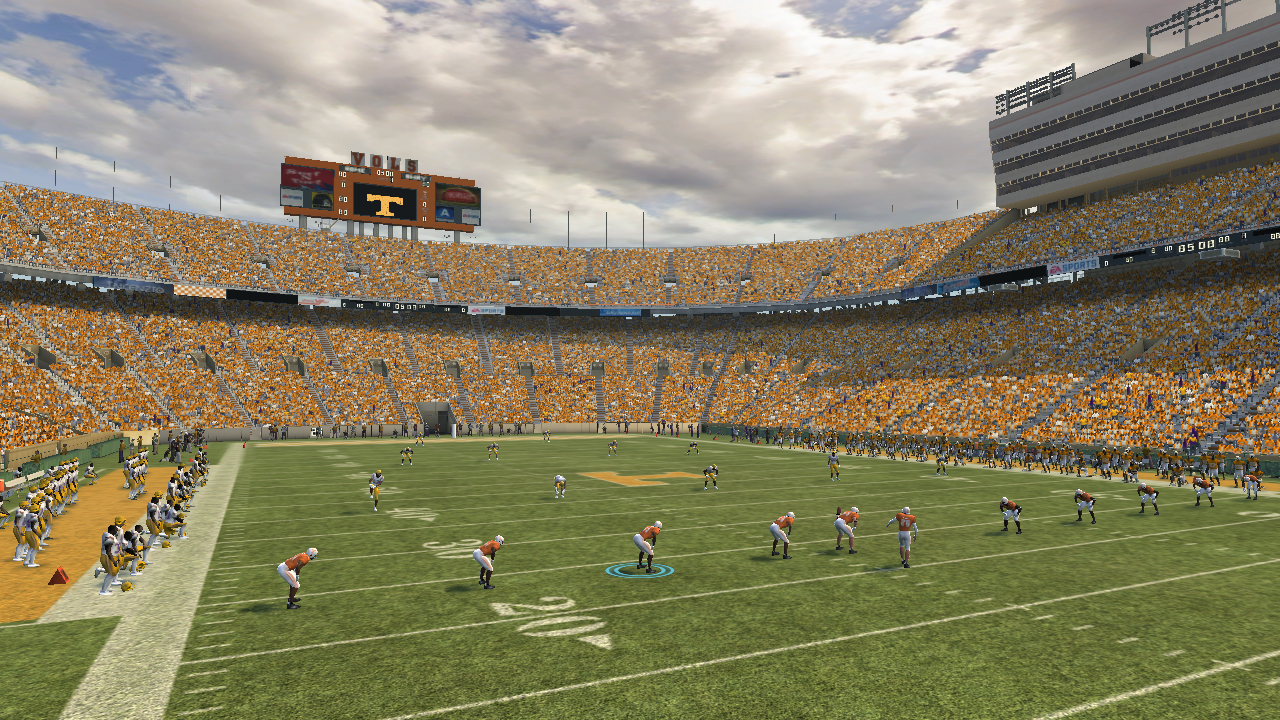
Our goal wasn’t simply to increase visual fidelity, it was to recreate the true college gameday atmosphere. This was the era when white-outs, black-outs, and coordinated color crowds were becoming defining moments in college football. Earlier versions of NCAA Football treated the sidelines as largely empty, which made even packed stadiums feel sterile and disconnected from the emotion of Saturdays. By building out cheerleaders, marching bands, sideline photographers, and active personnel, we transformed the game from a field simulation into an event, one rooted in school identity, ritual, and atmosphere that reflected regional passion, rivalry, and Saturday spectacle.

That same pursuit of authenticity extended directly to the players themselves. Previous versions of the game relied on a largely one-size-fits-all body model, which flattened the visual language of the sport. In reality, college football is defined by contrast, the mass and power of linemen colliding up front set against the speed and leanness of receivers and defensive backs in space. We rebuilt player physiques by body type to restore that visual tension, ensuring that position, role, and presence were immediately readable at a glance.
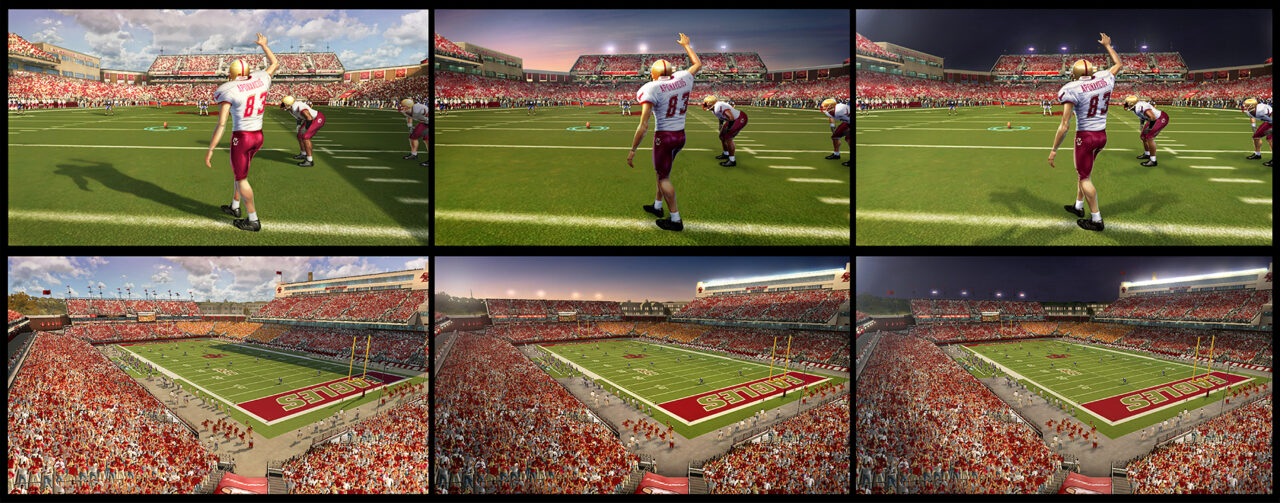
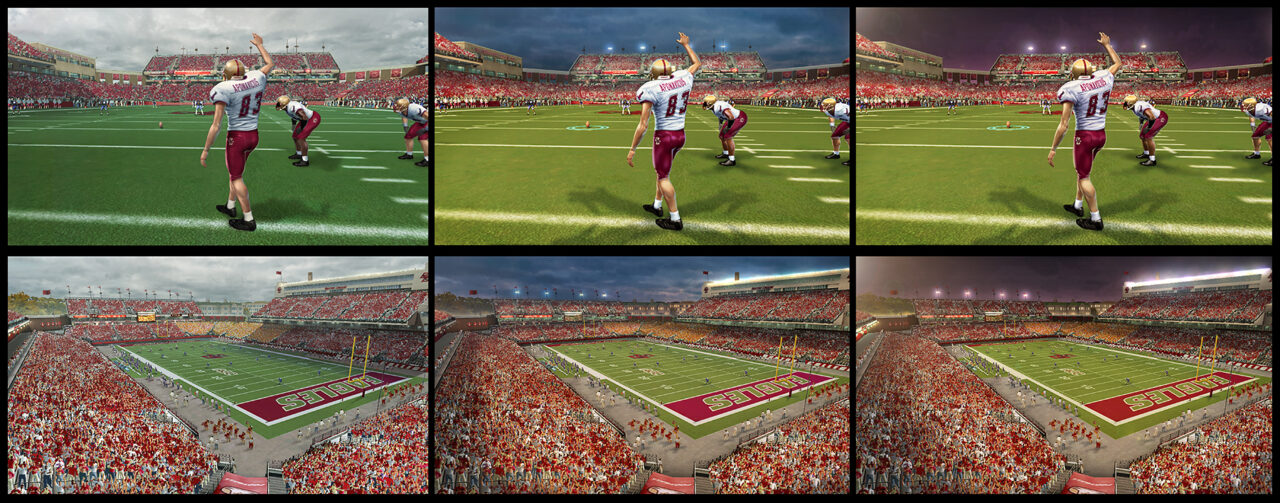
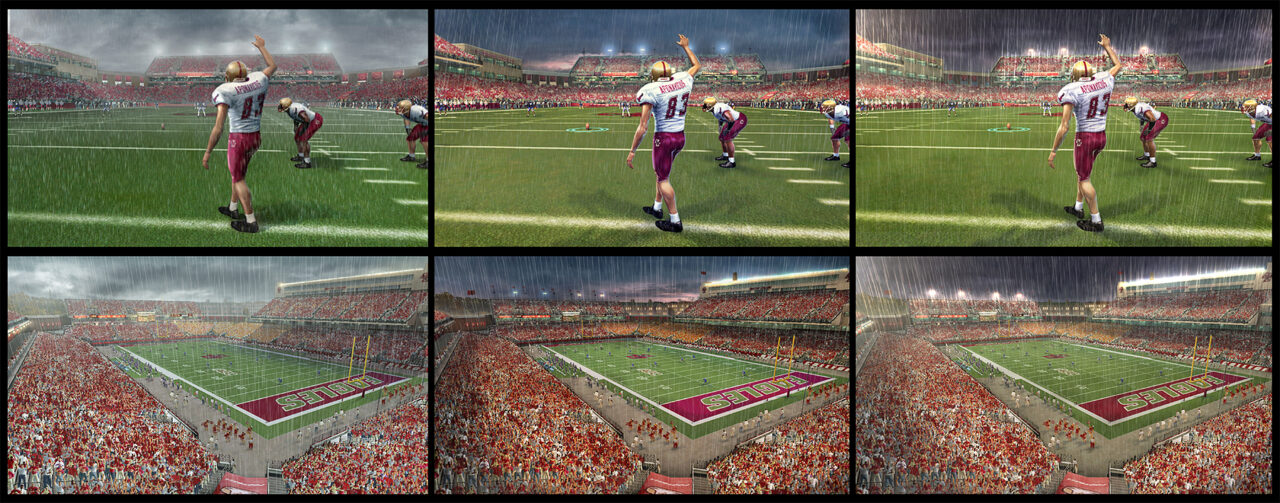
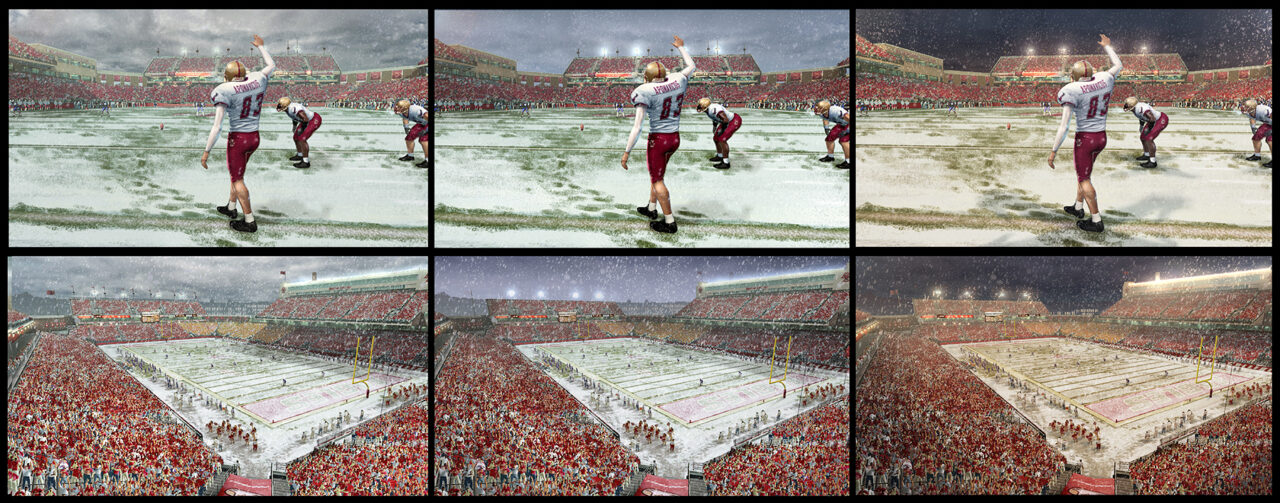
Weather and lighting were treated with the same rigor. We studied college games played across regions and seasons to understand how conditions shape both mood and readability. Snow didn’t simply fall, it accumulated, softened contrast, and muted color. Rain altered reflections and surface response. Overcast skies flattened light and shifted tone, while bright afternoons emphasized saturation and heat. Each condition was designed to feel distinct, reinforcing the sense that every game unfolded within its own environmental context rather than a neutral, repeatable backdrop.
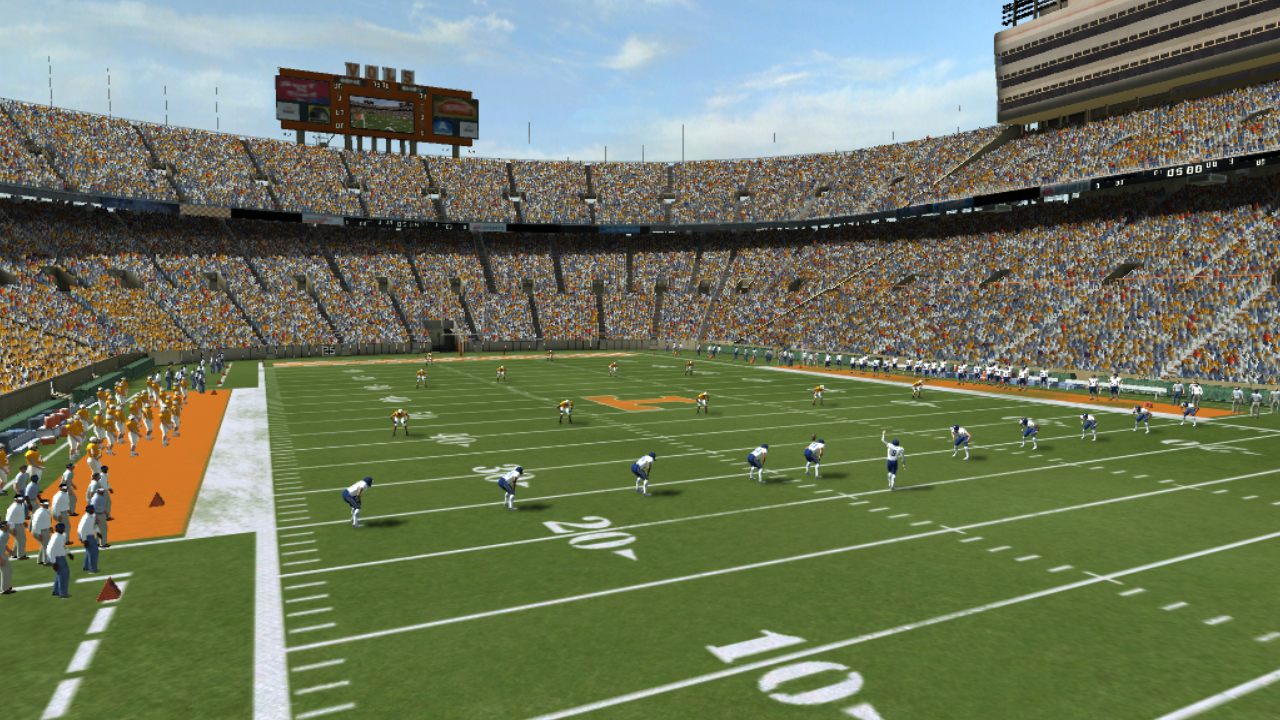
BEFORE
AFTER
By anchoring production around clear visual targets and validating them through iterative process and comparison, NCAA Football 09 transformed its visual foundation without fragmenting its identity. The result was a cohesive visual language that scaled across teams, stadiums, and conditions, while preserving the emotion that defines college football.
Mascot Challenge
In NCAA Football 09, mascots appeared during regular gameplay and featured interactive moments after scoring, reinforcing school identity and adding emotional punctuation to big plays. These weren’t background props, they were active participants in the gameday atmosphere, designed to reward momentum and amplify crowd energy.
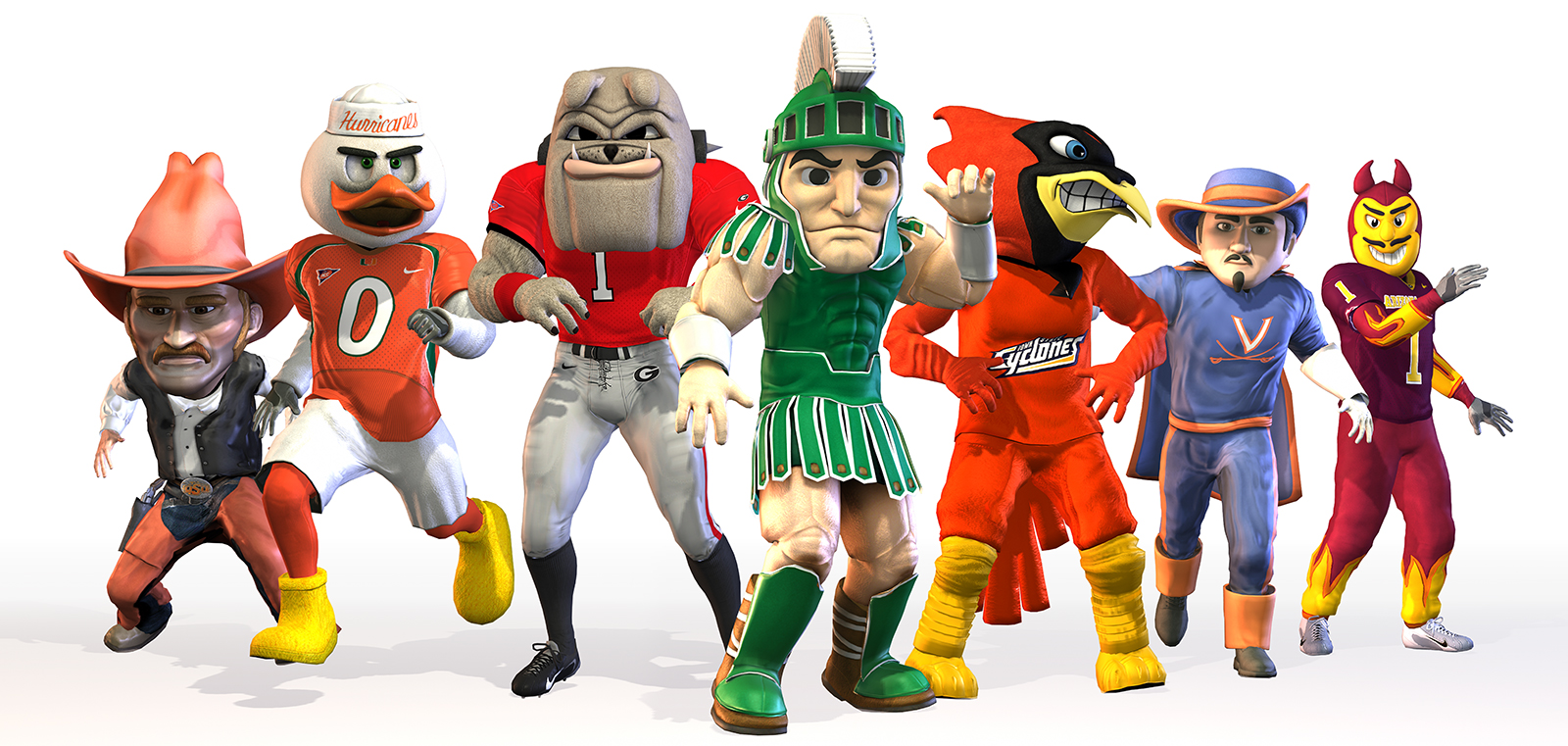
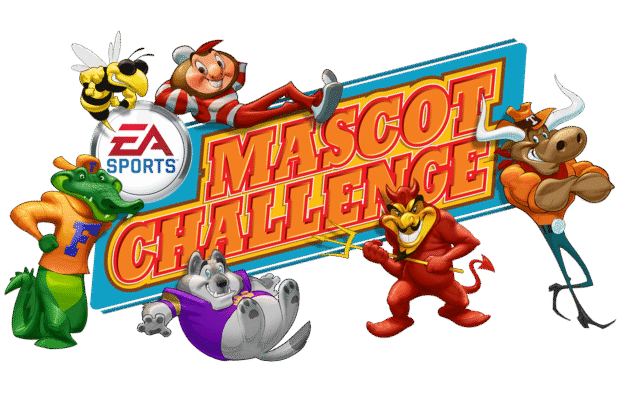
Mascot Challenge grew naturally out of that foundation. Rather than treating mascots as a visual novelty, the mode gave players direct control, allowing them to select their favorite school mascot and face off against a rival in a full game. I led the branding and visual direction for the mode, defining a look that distinguished it from the broadcast-driven realism of the main game while remaining unmistakably part of the NCAA Football universe. The result turned personality into play, translating tradition, rivalry, and humor into mechanics rather than cutscenes, and expanded the franchise’s identity through fun, spectacle, and deeper emotional connection to each school.
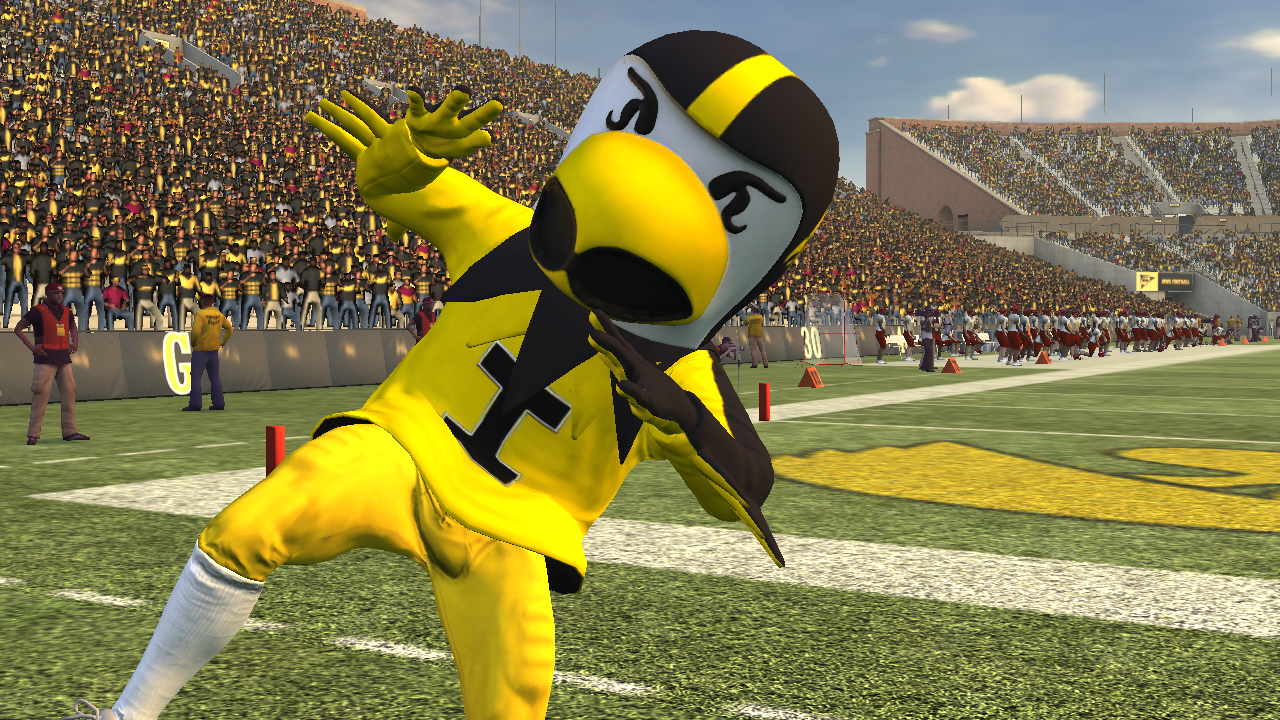
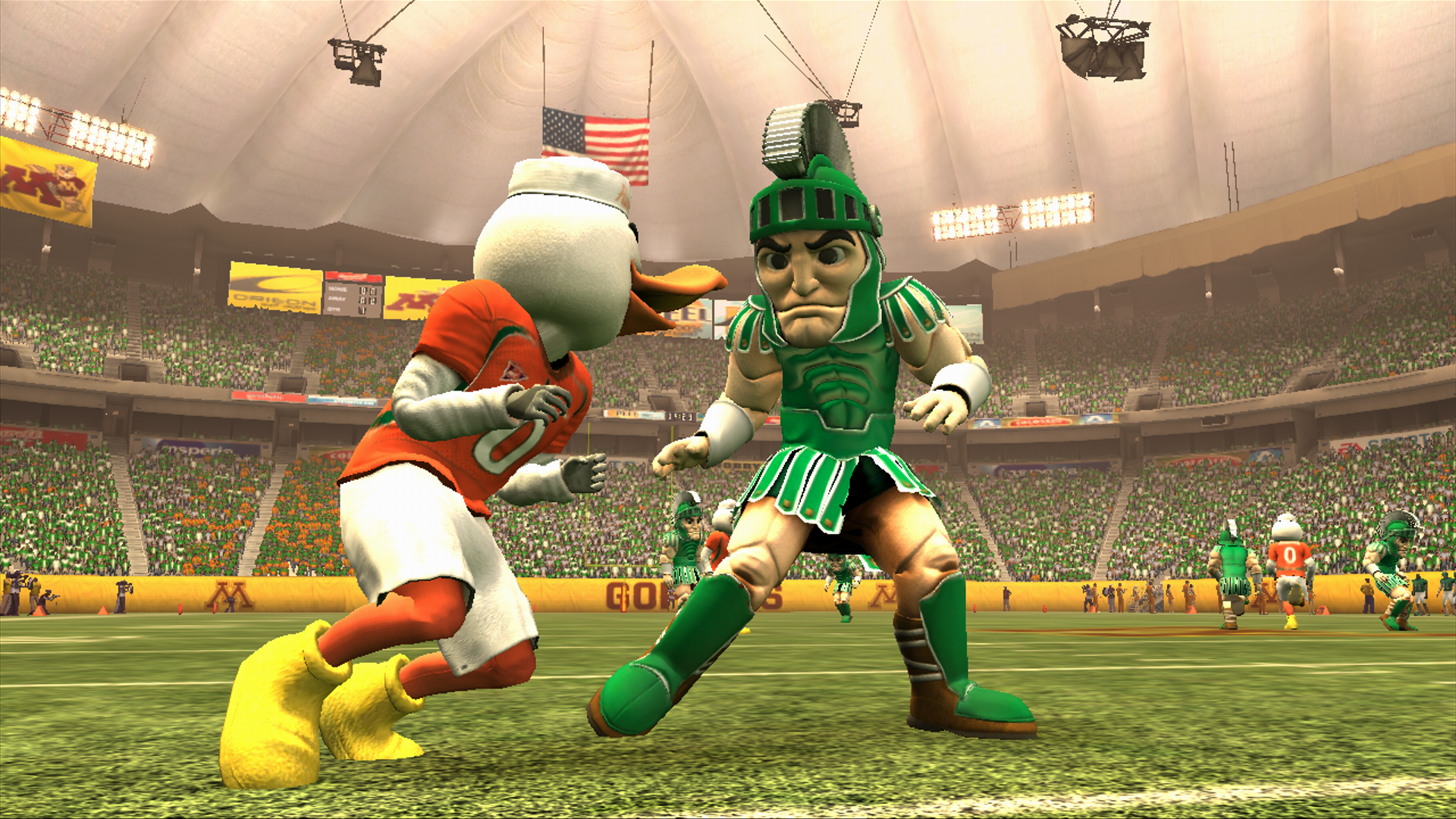
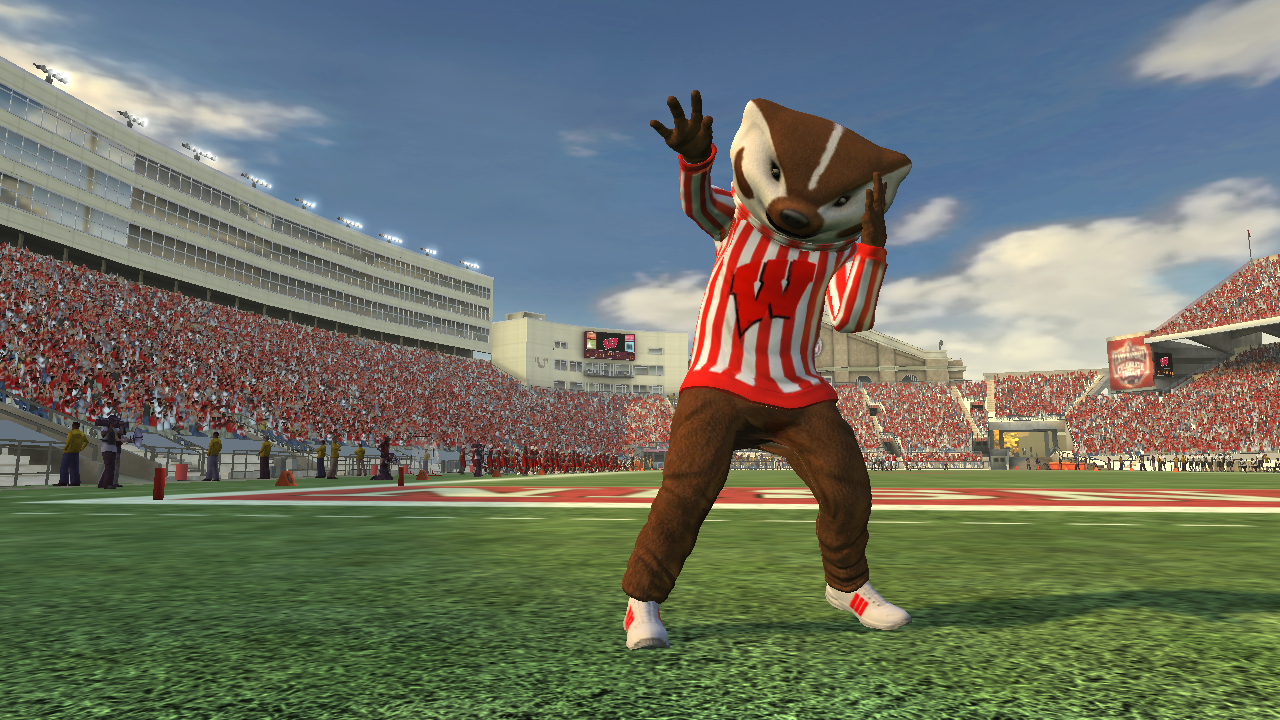
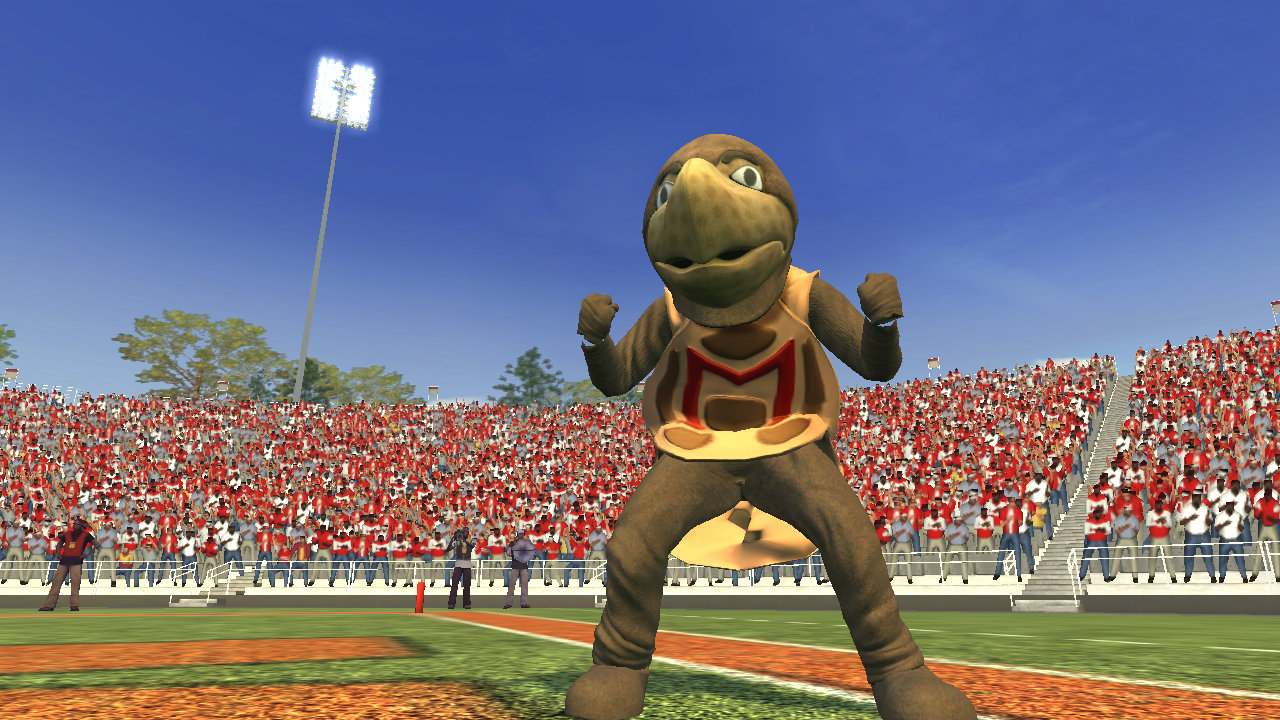
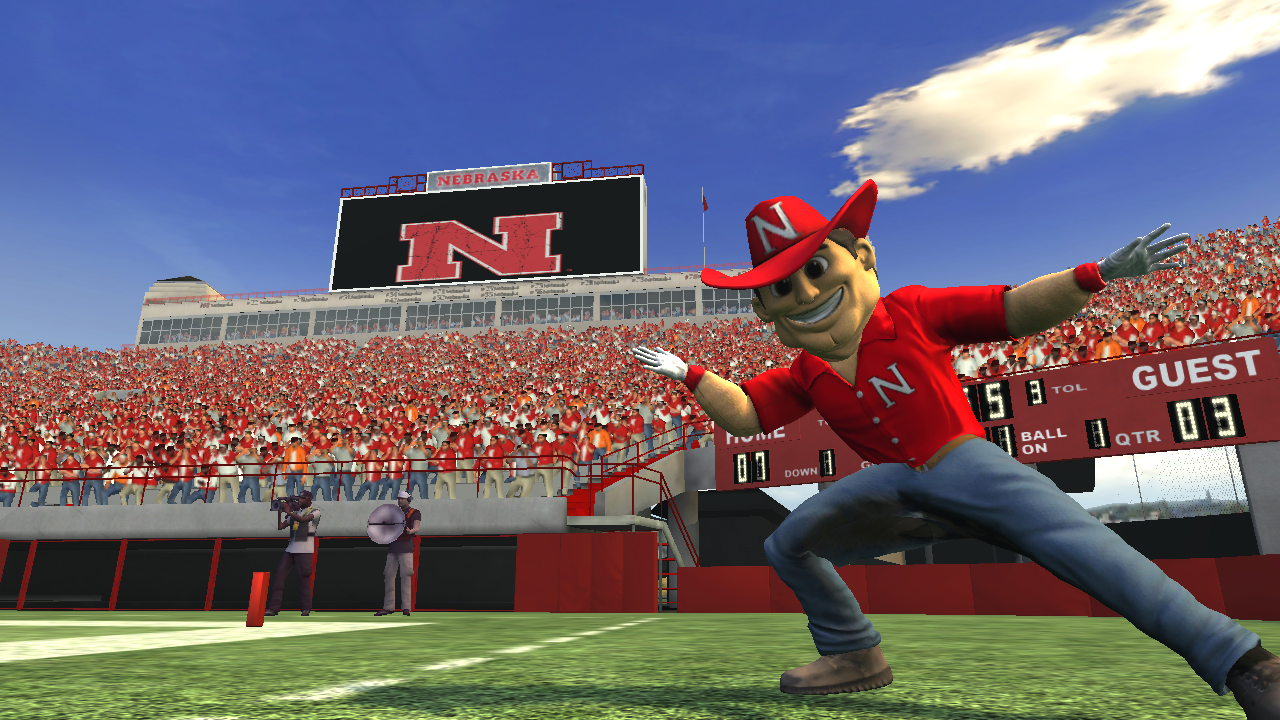
From a production standpoint, the challenge was balancing between spectacle and systemic consistency. Mascots required exaggerated proportions, expressive animation, and bold silhouettes, yet still had to function within the same systems as human players. Rigs, animation sets, and shaders were carefully authored to ensure mascots could move, collide, celebrate, and compete convincingly without breaking performance or tone. Mascot Challenge demonstrated that authenticity and playfulness weren’t opposing forces, but complementary tools for deepening fan connection.
Broadcast Presentation
Once the atmosphere was built, the next challenge was making sure players actually saw it. The broadcast layer became the lens through which the entire game was experienced, framing action, pacing emotion, and elevating the environment into a true gameday presentation. Camera language, transitions, overlays, and motion graphics were designed to mirror live college football broadcasts, ensuring that every kickoff, big play, and timeout felt intentional rather than incidental from opening kickoff through final whistle moments nationwide.
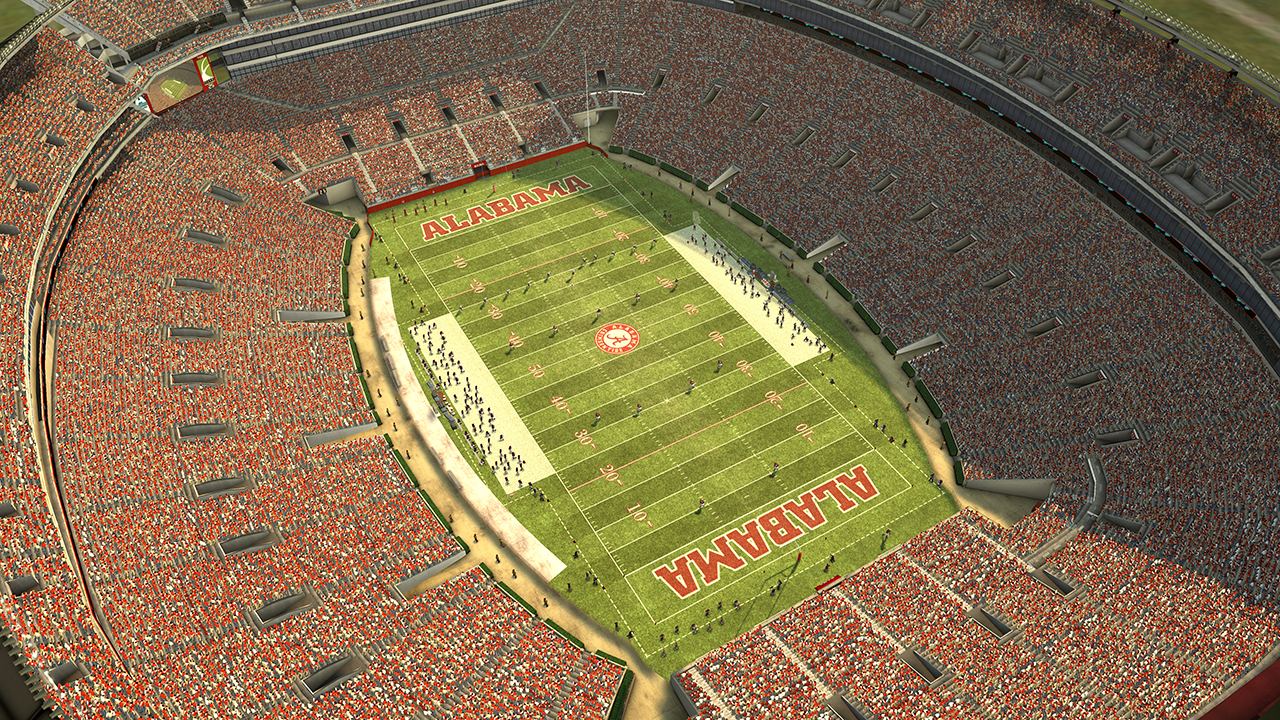
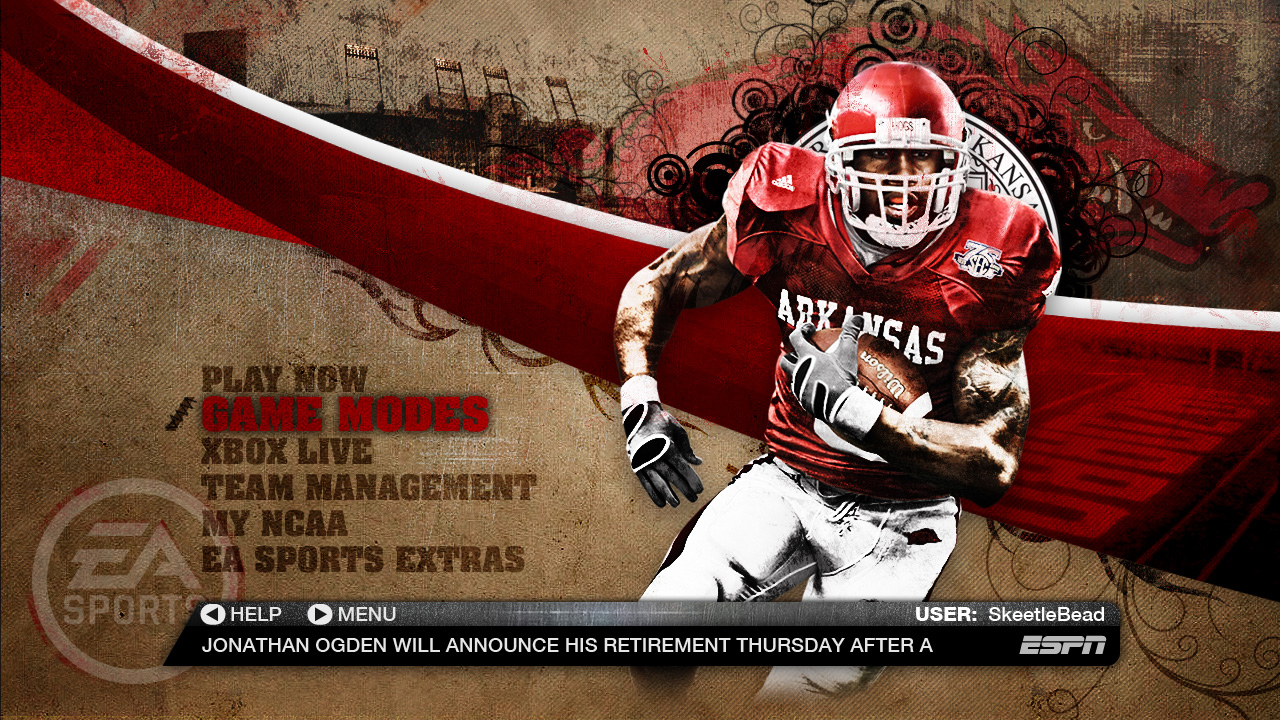
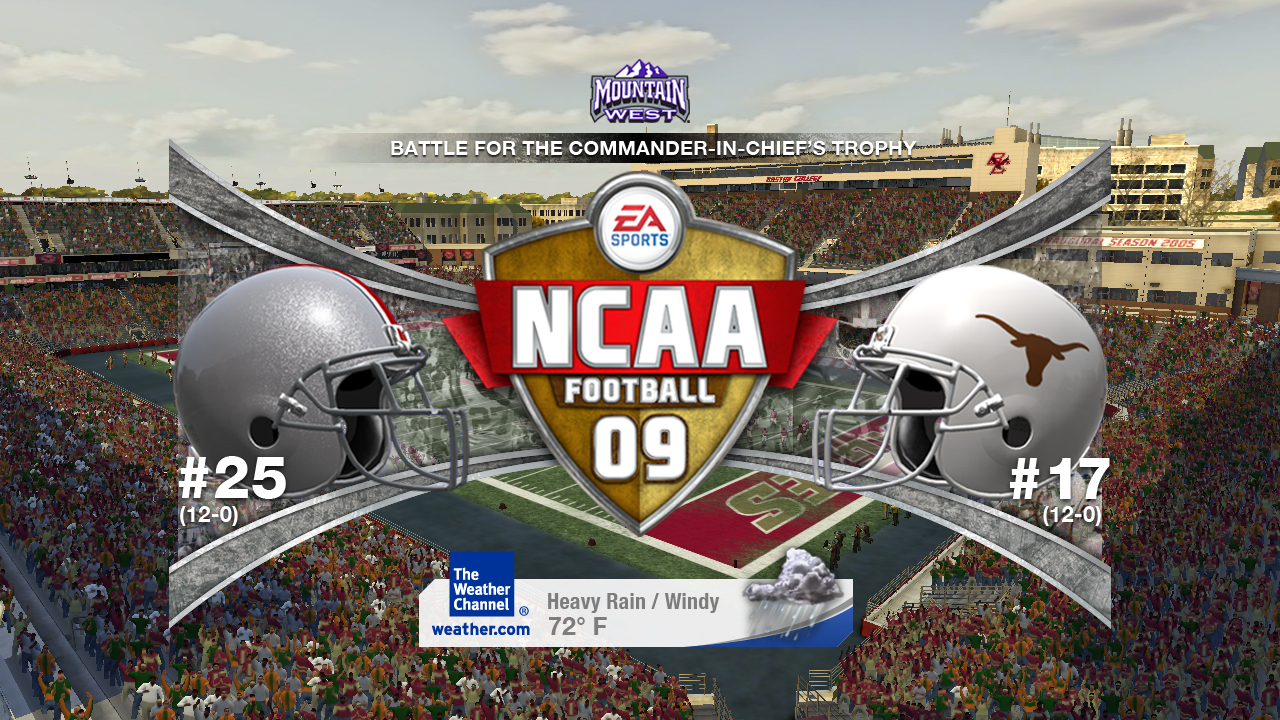
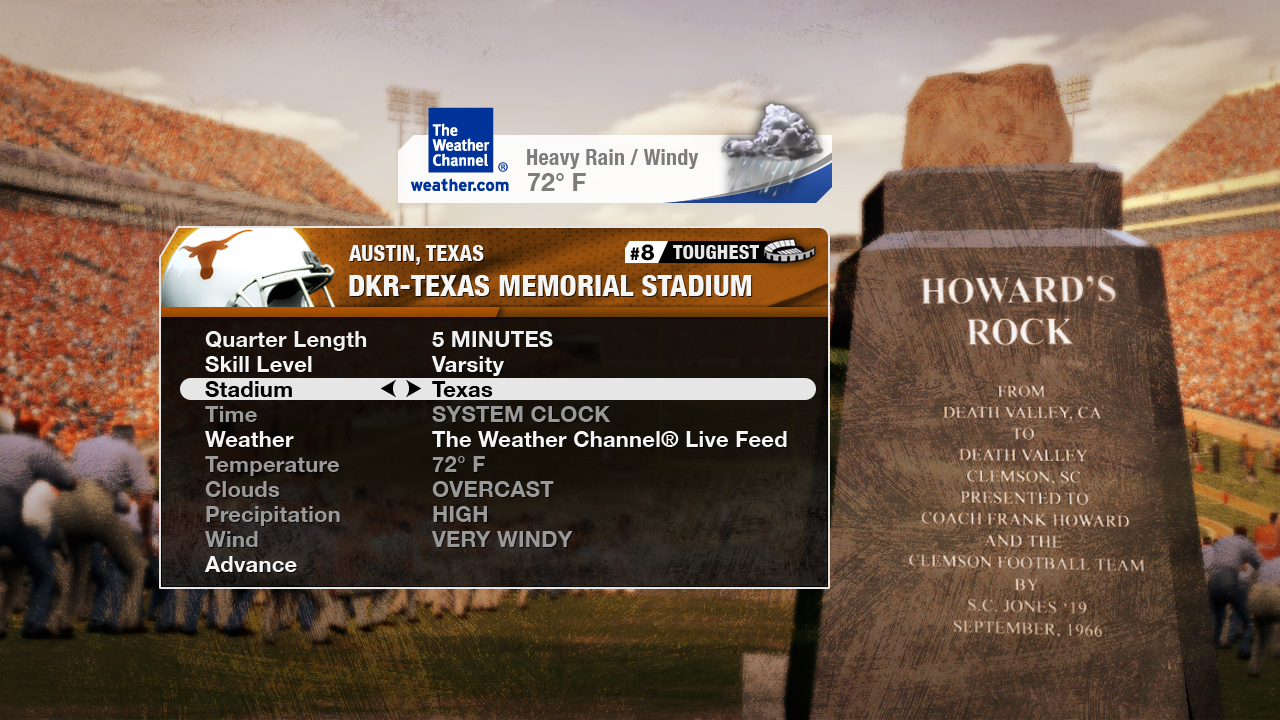
UI concepts with placeholder broadcast elements, designed to ensure gameday-ready clarity and pacing.
Broadcast cameras were rethought as storytelling tools, not just functional viewpoints. Angles were tuned to highlight crowd energy, sideline activity, and scale—allowing players to feel the size and intensity of the moment. Pre-game matchups, rivalry graphics, and contextual overlays helped establish stakes before the ball was even snapped, reinforcing the sense that each game was an event, not just another matchup.


Lighting and color balance were tuned to preserve readability and mood across all conditions—bright afternoons, overcast skies, rain, snow, and night games under stadium lights. These adjustments ensured that uniforms, fields, crowds, and broadcast graphics remained clear and legible while still communicating the emotional tone of each environment.

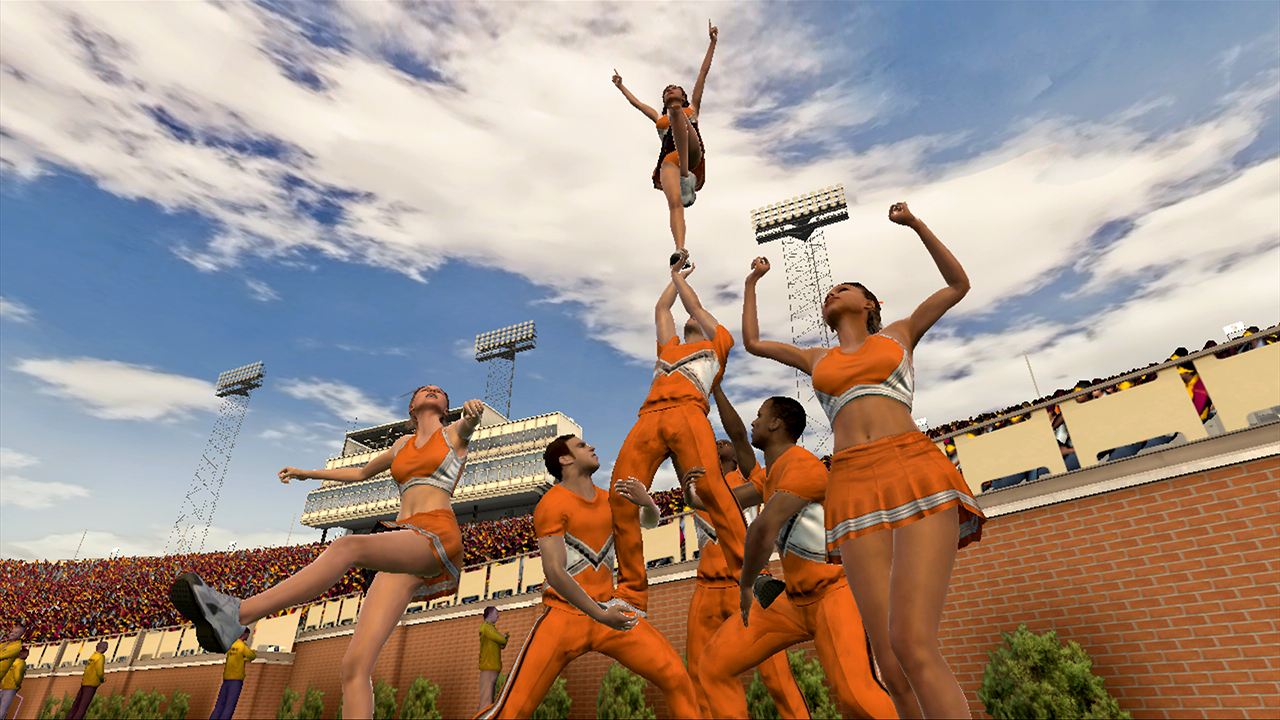
Together, the broadcast layer unified systems, environments, and presentation into a cohesive experience, one that showcased the work poured into stadiums, crowds, and atmosphere while delivering the rhythm, drama, and spectacle of a true college football Saturday.
Visual Direction & Collaboration
NCAA Football 09, was built by a deeply talented, cross-disciplinary team that cared as much about authenticity and emotion as they did about systems and performance. Working alongside designers, artists, engineers, animators, and producers who shared a passion for college football pushed the work beyond feature checklists into something cohesive and expressive. As Art Director, I helped define and guide the visual direction across the entire game, overseeing character improvements, lighting, stadiums, atmosphere, presentation, UI, and broadcast elements, to ensure every system spoke the same visual language. The result was a franchise entry that didn’t just play well, but felt alive, one that celebrated school identity, rivalry, and pageantry through every layer of the experience.
© Electronic Arts, Inc.
All images and trademarks are the property of their respective owners and used here for portfolio purposes only.
My Role and Areas of Contribution:
Product & Strategy
Vision
Align business goals, user needs, and technical realities into clear direction.
Experience & Interface Design (UX/UI)
Design intuitive, scalable experiences balancing usability and aesthetics.
Application & System Design
Design within real engineering constraints and sustainability.
Creative & Design Leadership
Set direction, mentor teams, and maintain quality through delivery.
Spatial & Environmental Design
Design environments where space and motion guide behavior.
3D Visualization & Prototyping
Utilize 3D to test concepts, align stakeholders, and reduce overall risk.