
Designing Systems For Distributed Teams to Think, Decide, and Act Together
Teams working to solve tomorrow’s problems have never been in the same room.
This work represents early mixed-reality remote collaboration prototypes developed for enterprise customers as spatial computing began to mature as a viable platform. These experiences were designed, built, and deployed as working systems to explore how mixed reality could support real collaboration, not just communication, across distance.
Rather than focusing on video calls or screen sharing, the work explored how shared spatial context, presence, and intent could enable teams to reason about complex physical systems together, even when separated by geography.
The Problem
Collaboration needs shared context, not just communication.
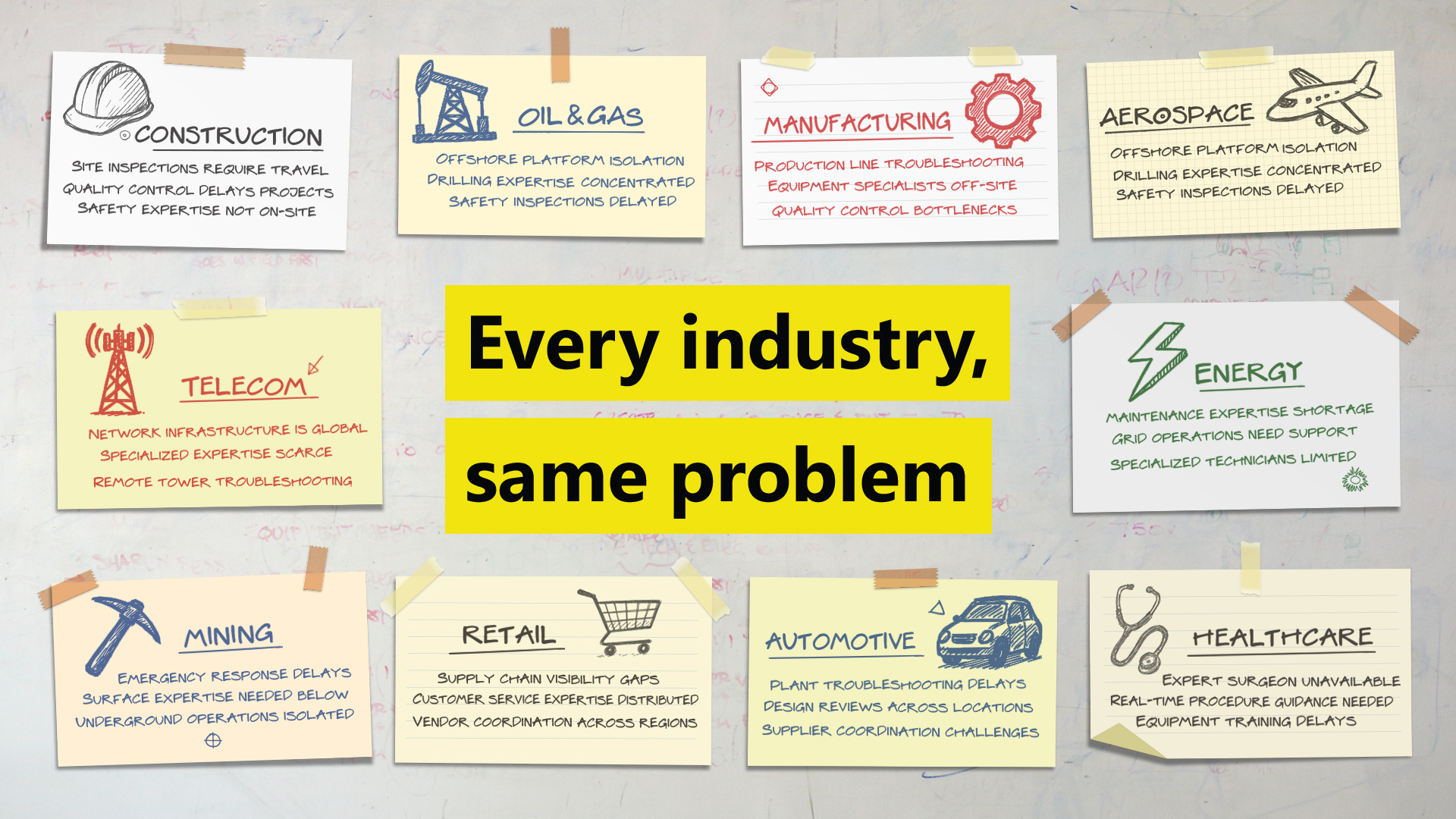
As work became increasingly distributed, the problems teams were solving did not. Across industries such as construction, manufacturing, medical, energy, and aviation, critical decisions still depended on physical environments, equipment, and spatial relationships. Yet the people needed to make those decisions were no longer co-located with the work.
Traditional collaboration tools handled conversation well but failed when teams needed to reason about the same physical system together. Phone calls, documents, and video feeds fragmented understanding across participants. Teams could talk, but they struggled to align, on what mattered, what constraints applied, and what actions should come next.
Framing The Opportunity
Early discovery revealed that collaboration breakdowns were rarely caused by missing data. They were caused by misalignment, different people interpreting the same situation through different lenses, at different moments, with no persistent spatial reference tying their understanding together.
This reframed the opportunity entirely. Effective remote collaboration required a shared spatial system.
One Framework, Infinite Applications
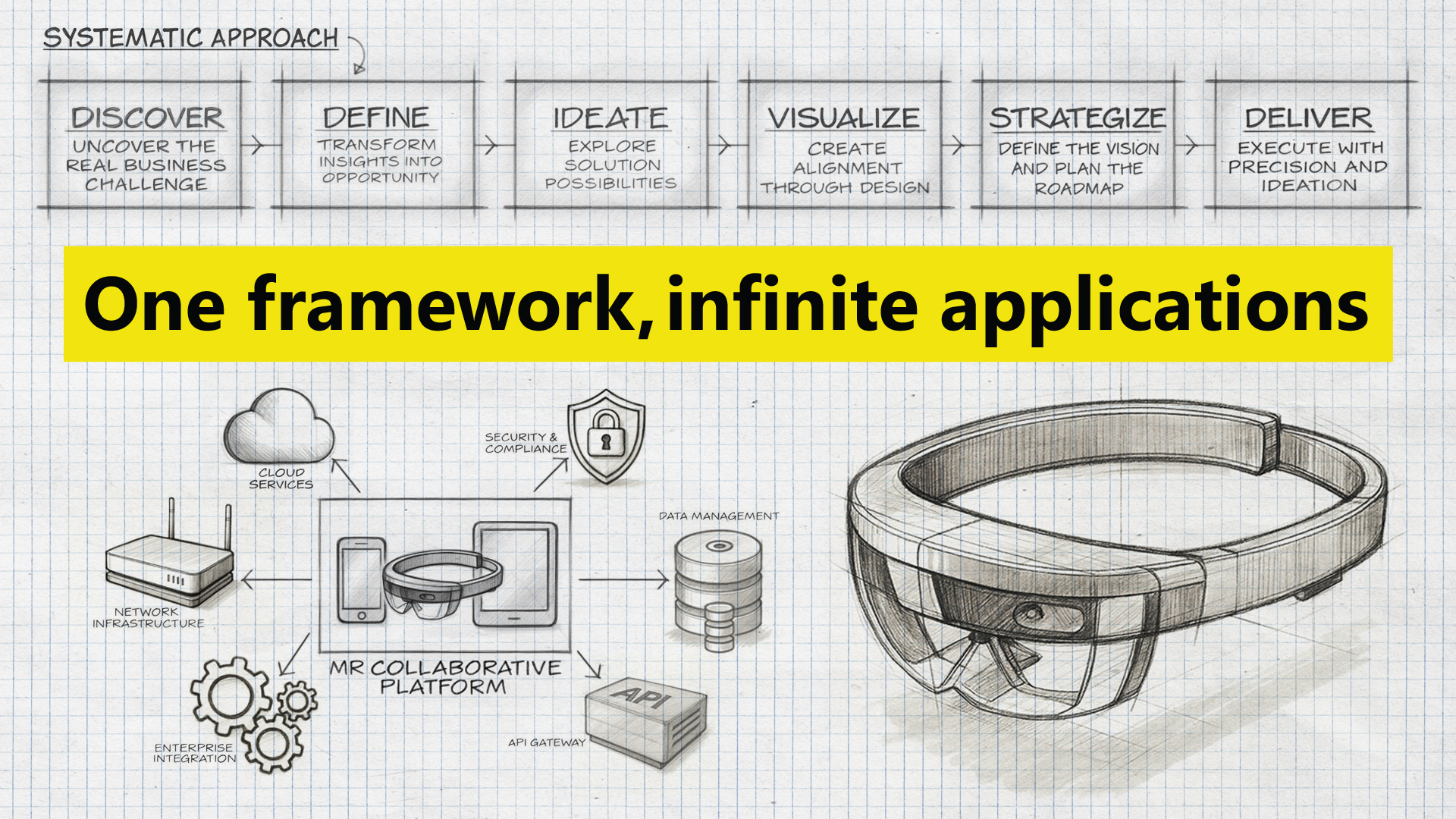
Rather than building one-off solutions for each customer scenario, the work focused on defining a reusable collaboration framework. A small set of interaction primitives, joining a shared session, establishing presence, sharing artifacts, and coordinating attention, could be composed to support a wide range of operational use cases.
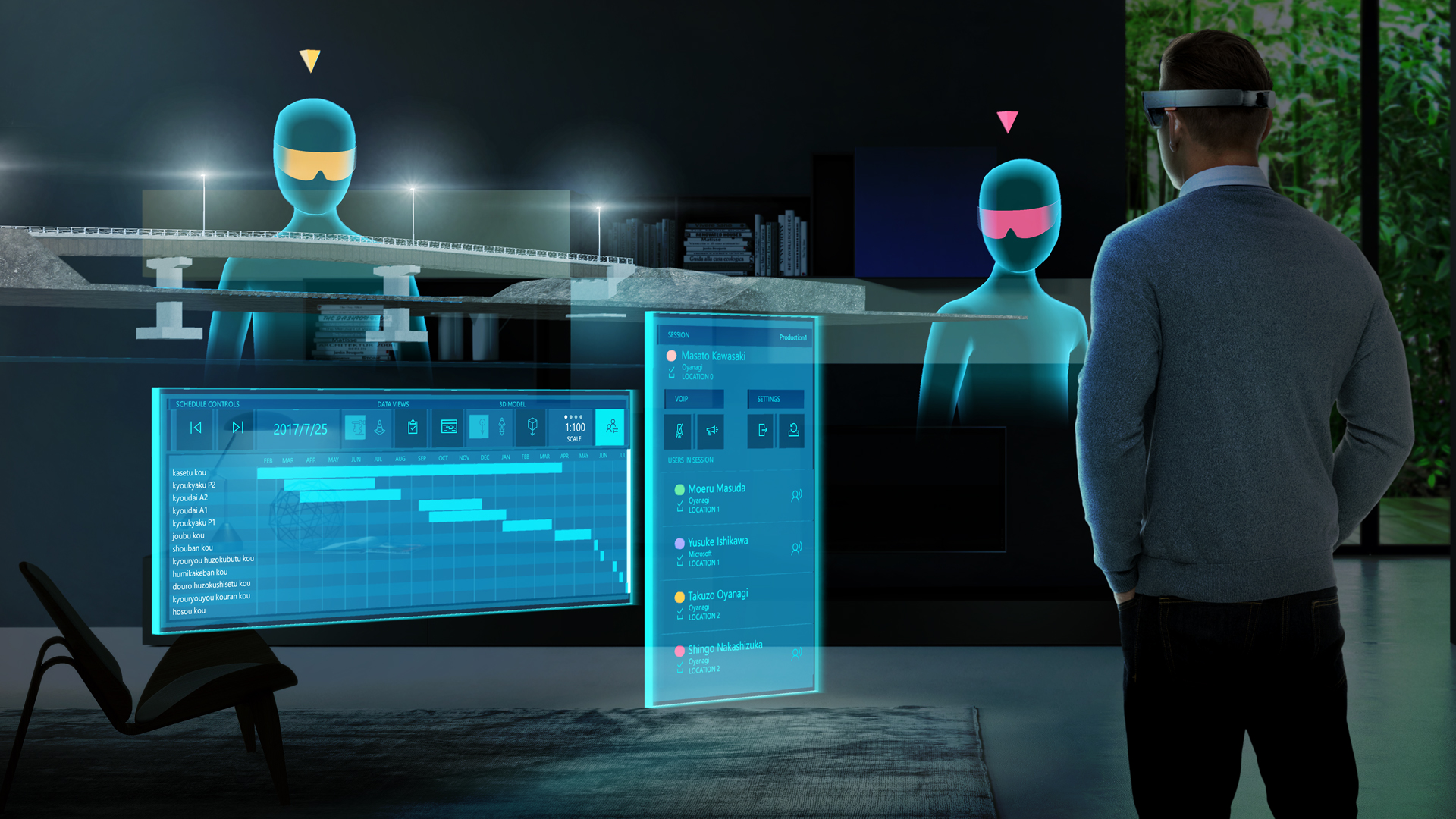
Case Study: Oyunagi Construction
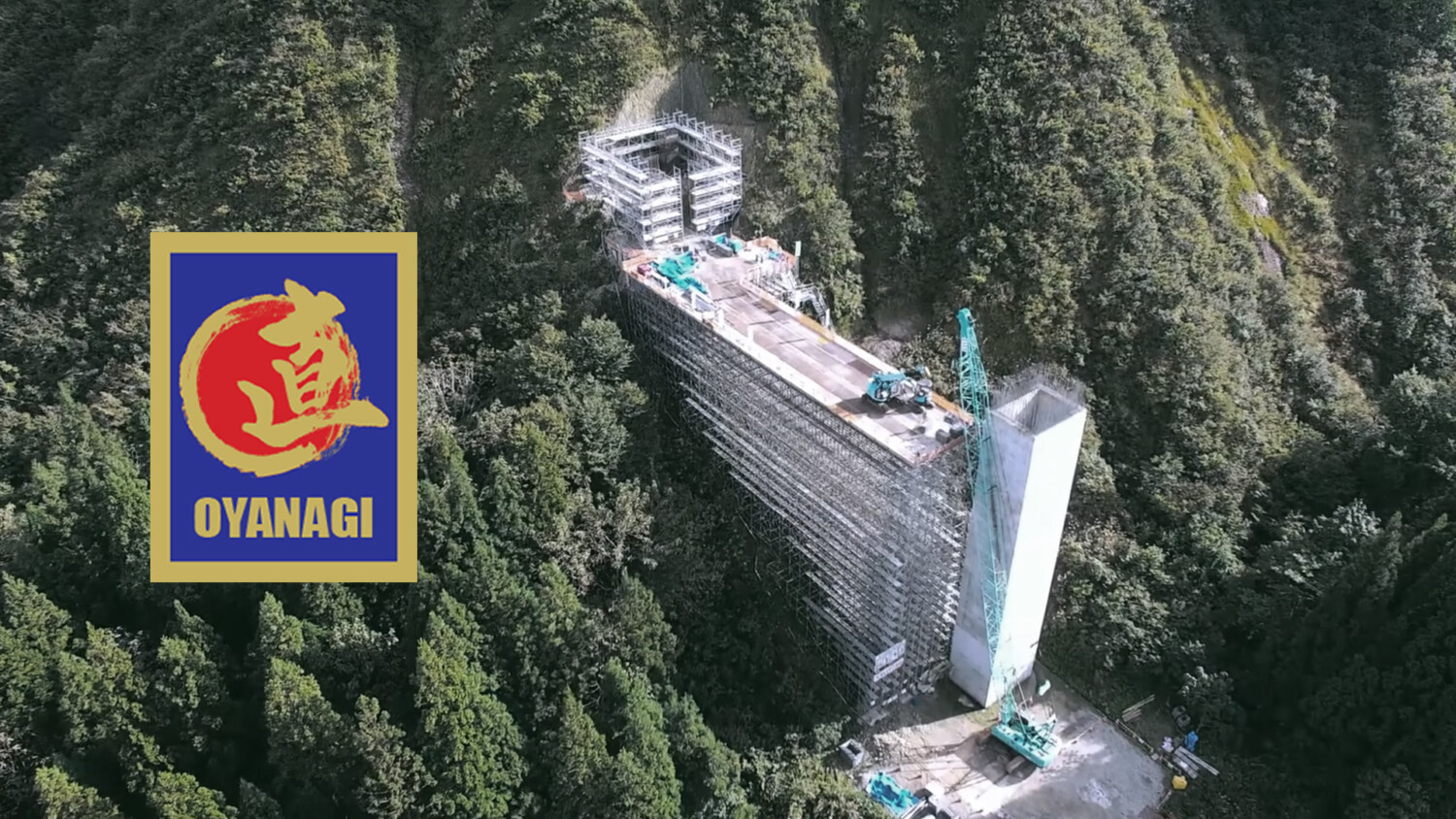
Working with Oyanagi Construction in Japan, the remote collaboration framework was applied to real-world planning and coordination challenges within complex construction environments. These efforts focused on enabling geographically distributed stakeholders to review site conditions, discuss evolving plans, and align on next steps without needing to be physically co-located. The work explored how shared spatial context could support clearer communication and reduce ambiguity during critical phases of a project.
The resulting prototypes emphasized helping teams reason about the same worksite together by anchoring discussion to shared spatial references and persistent project context. Lightweight collaboration mechanics allowed participants to focus attention, reference specific areas of concern, and maintain continuity over time. Rather than relying on disconnected drawings, static photos, or fragmented calls, teams were able to ground conversation directly in a shared representation of work in progress.
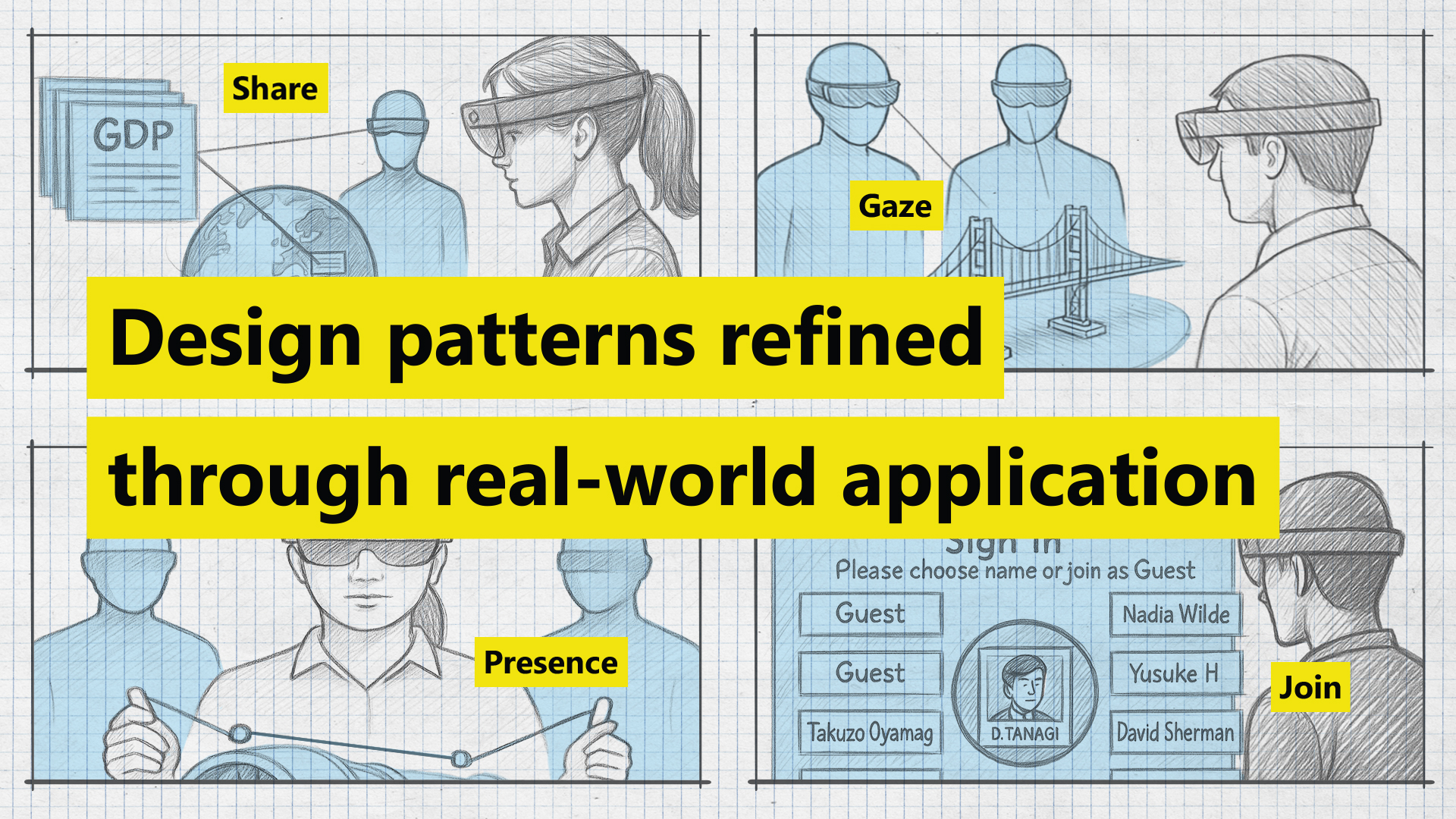
Design Patterns & Collaboration Mechanics
Across engagements, the focus remained on refining a small set of reliable collaboration patterns. Presence indicators, identity cues, shared object interaction, and lightweight session controls were designed to reduce cognitive load and help teams focus on the work itself.
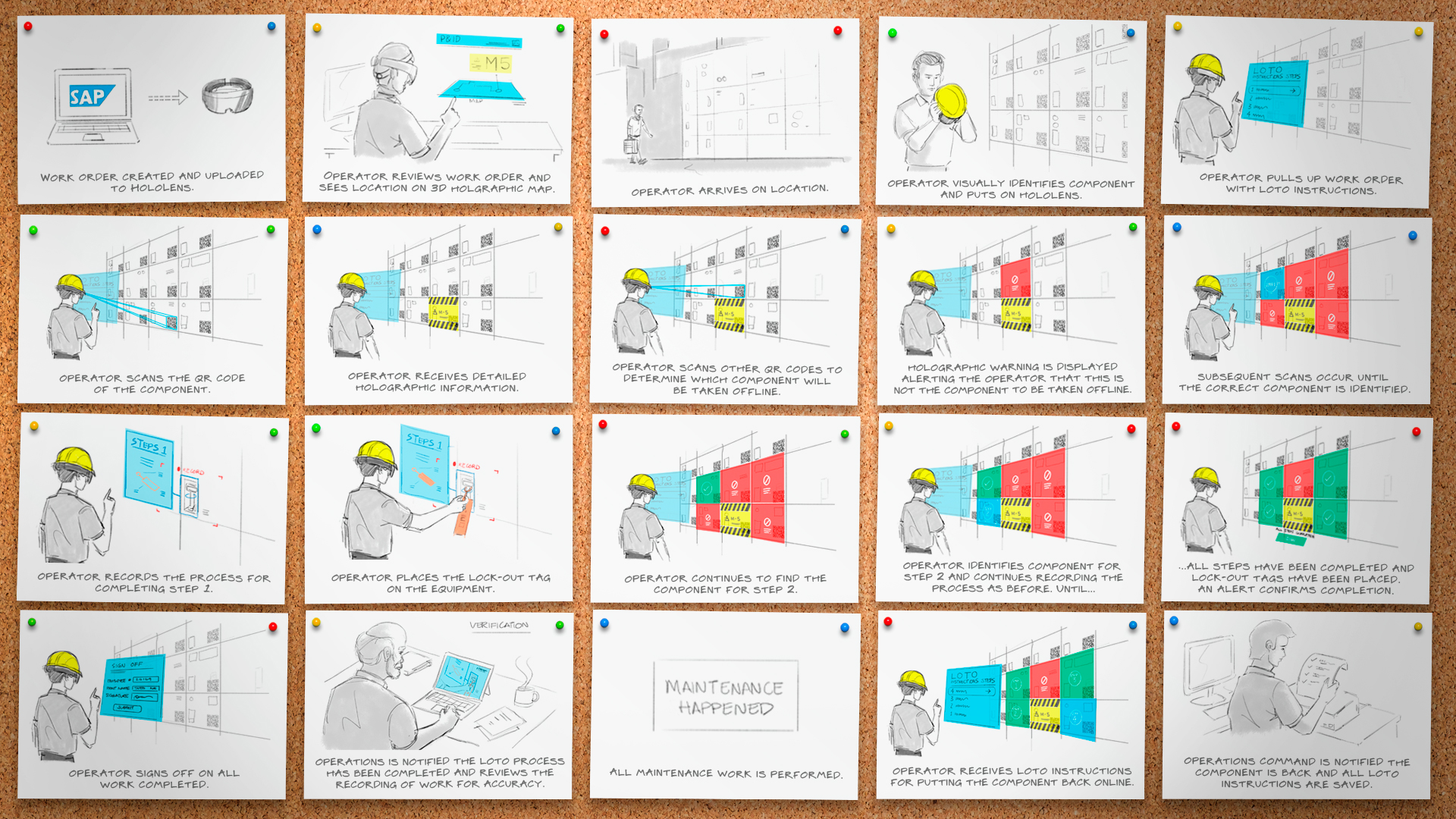
Applied Scenario: Power Plant Maintenance (Lock-Out/Tag-Out)
This collaboration framework was also applied to safety-critical maintenance workflows within a power generation environment, focusing on Lock-Out/Tag-Out (LOTO) procedures. These scenarios explored how distributed teams could coordinate complex maintenance tasks while ensuring strict adherence to safety protocols and operational sequencing.
Using a shared spatial representation of the plant environment, operators and remote stakeholders were able to reference specific equipment, validate component states, and confirm each step of the LOTO process in context. Rather than relying on disconnected checklists, radios, or verbal confirmation alone, each action was anchored to the physical system being serviced.
The prototypes emphasized clarity, verification, and continuity. Visual indicators confirmed correct component identification, highlighted incorrect selections, and guided operators through multi-step procedures while maintaining a persistent record of actions taken. This approach supported safer execution, reduced ambiguity, and provided a clearer audit trail for post-maintenance review and validation.
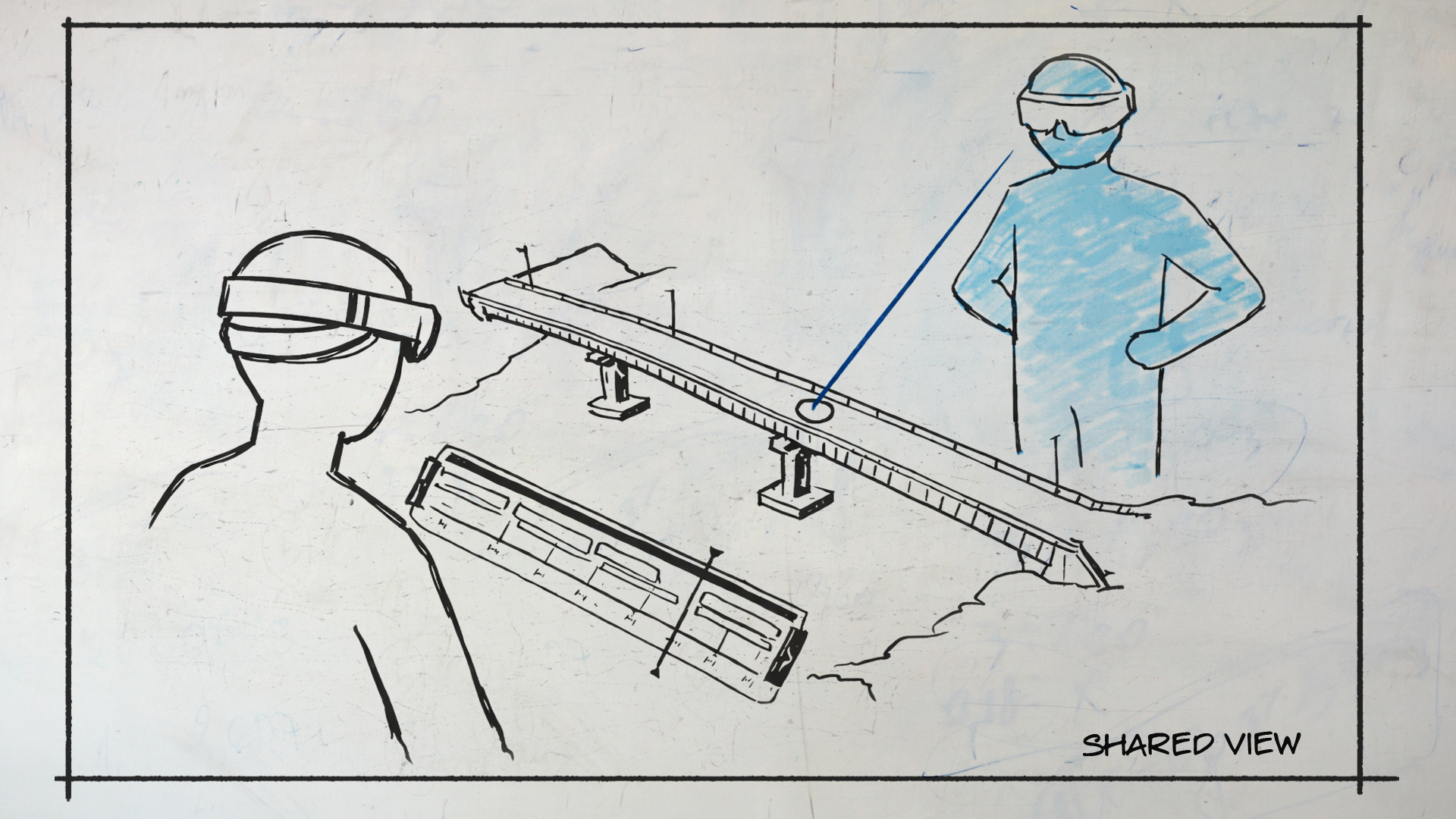
Leadership & System Thinking
My role fluctuated depending on the phase and needs of the engagement. Similar to the virtual training work, I operated across creative direction, experience design, program leadership, and business development.
In early conversations, I often met directly with customers to understand operational constraints, risks, and objectives. Many engagements began with whiteboard sessions and storyboards that translated abstract collaboration challenges into concrete spatial workflows. From there, I worked with engineering and design teams to shape prototypes, guide execution, and ensure alignment with customer goals.
In some cases, I led the full arc, discovery through delivery. In others, I framed the vision, storyboarded the system, and handed execution to the broader team while remaining accountable for direction and coherence.
The common thread was system thinking: abstracting complex operational problems into clear, structured collaboration models that could scale across industries and use cases.
Outcome
Across scenarios, from construction planning to safety-critical maintenance, the framework demonstrated that shared spatial context fundamentally improves distributed collaboration.
By grounding conversation in persistent, spatially anchored representations of the work, teams were able to:
Reduce ambiguity.
Improve procedural clarity.
Support safer execution.
Maintain continuity across time and distance.
The result was not simply a feature set, but a repeatable collaboration model adaptable across industries.
My Role and Areas of Contribution:
Product & Strategy
Vision
Align business goals, user needs, and technical realities into clear direction.
Experience & Interface Design (UX/UI)
Design intuitive, scalable experiences balancing usability and aesthetics.
Application & System Design
Design within real engineering constraints and sustainability.
Creative & Design Leadership
Set direction, mentor teams, and maintain quality through delivery.
Spatial & Environmental Design
Design environments where space and motion guide behavior.
3D Visualization & Prototyping
Utilize 3D to test concepts, align stakeholders, and reduce overall risk.